If you're thinking about jumping into FromSoftware’s massive open-world RPG in 2026, one of the first things you’ll probably want to know is simple: how long does it actually take to beat Elden Ring? The short version is that there isn’t one fixed answer. Your total playtime can swing hard depending on whether you stick to the main path, chase every side dungeon, or get pulled into hours of exploration across the Lands Between. In this guide, we’re breaking down the base game, Shadow of the Erdtree, and the kinds of runs that usually shape those final hour counts.
How Long to Beat Elden Ring
If you mainly care about reaching the ending, Elden Ring usually takes around 50 to 60 hours. That estimate assumes you clear the mandatory legacy dungeons — Stormveil Castle, Raya Lucaria Academy, Volcano Manor, Leyndell, and Crumbling Farum Azula — beat the required bosses, and don’t spend too much time wandering into optional zones. Data from HowLongToBeat and long-running Reddit discussions lines up pretty well with that number, especially for players moving at a steady pace rather than speedrunning or fully combing the map.
A main story plus extras run is a very different story. Once you start adding major optional bosses like Starscourge Radahn and Mohg, side dungeons, and a decent chunk of NPC questlines, you’re usually looking at 90 to 110 hours. That’s just how Elden Ring works: even when content is technically optional, it rarely feels optional when you spot a new cave, tower, or boss arena on the horizon.
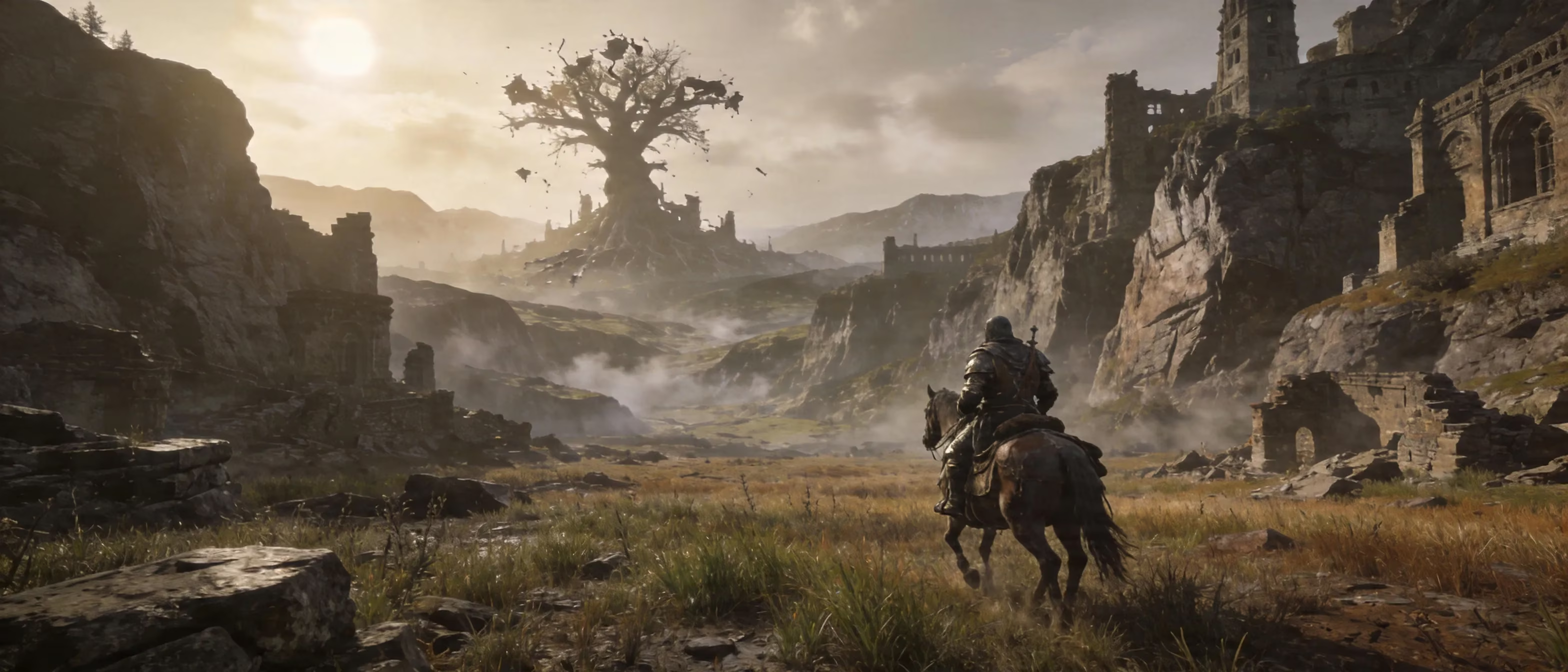
If you’re going full completionist, expect the base game alone to land somewhere around 130 to 160 hours. That means chasing every Site of Grace, every Remembrance boss, nearly every cave and catacomb, and seeing NPC questlines through to their endings. Add the DLC on top, and your total can easily climb past 180 hours.
| Playstyle | Base Game Hours | With Shadow of the Erdtree |
|---|---|---|
| Main Story | 50–60 hrs | 75–90 hrs |
| Main + Extras | 90–110 hrs | 120–145 hrs |
| Completionist | 130–160 hrs | 180–200+ hrs |
Elden Ring Playtime by Player Type
First-time Souls players usually take the longest, and honestly, that’s normal. Elden Ring asks you to learn stamina control, dodge timing, poise, spacing, and boss pattern recognition all at once. Early walls like Margit, Godrick, and even Leonine Misbegotten can eat up a surprising amount of time. If you’re new to the genre and exploring thoroughly without leaning too hard on guides, the base game often ends up in the 80 to 120 hour range.
Players following a guide route can cut that down a lot. When you already know which Spirit Ashes are worth grabbing, which talismans matter early, where to get Smithing Stones, and which bosses you can safely skip, the whole run becomes way more efficient. In most cases, a guide-assisted playthrough reaches the credits in about 55 to 70 hours while still covering most of the game’s biggest highlights.
A blind exploration run is usually the longest route short of true completionism, but for a lot of players, it’s also the best one. Riding Torrent toward every suspicious ruin, unlocking towers with Stonesword Keys, and stumbling into places like Nokron or Ainsel River with zero context can push a first run well past 100 hours. It’s pretty common to see players hit hour 70 or 80 and still feel like they’ve only uncovered part of the map.
Co-op and summon-heavy runs change the pacing in a different way. Summoning gold phantoms with the Furlcalling Finger Remedy, waiting around for signs, and dealing with co-op area restrictions adds extra time even if it makes bosses easier. Those runs usually settle around 70 to 90 hours for a main story plus extras approach.
What Changes How Long to Beat Elden Ring
Your build matters a lot more than some players expect. If you settle into a focused Strength or Intelligence setup early, push Vigor to the 40 soft cap quickly, and get your main weapon to at least +6 before Margit, your run tends to move much faster. On the other hand, if your stats are scattered and your weapon upgrades lag behind, you’ll spend more time farming runes, redoing fights, and fixing mistakes later. Respeccing with a Larval Tear after Rennala can save a run, but correcting a weak build at hour 30 feels very different from doing it at hour 90.
Then there are the boss walls. These are probably the biggest single factor in how long Elden Ring takes. Margit the Fell Omen is still one of the most common early roadblocks because his delayed swings and holy blade follow-ups punish panic rolling hard. On a first run, it’s not unusual for him to cost two to four hours by himself. Much later, the Fire Giant does the same thing for a lot of players, especially if their weapon damage hasn’t kept up. That fight alone can add another two or three hours of attempts.
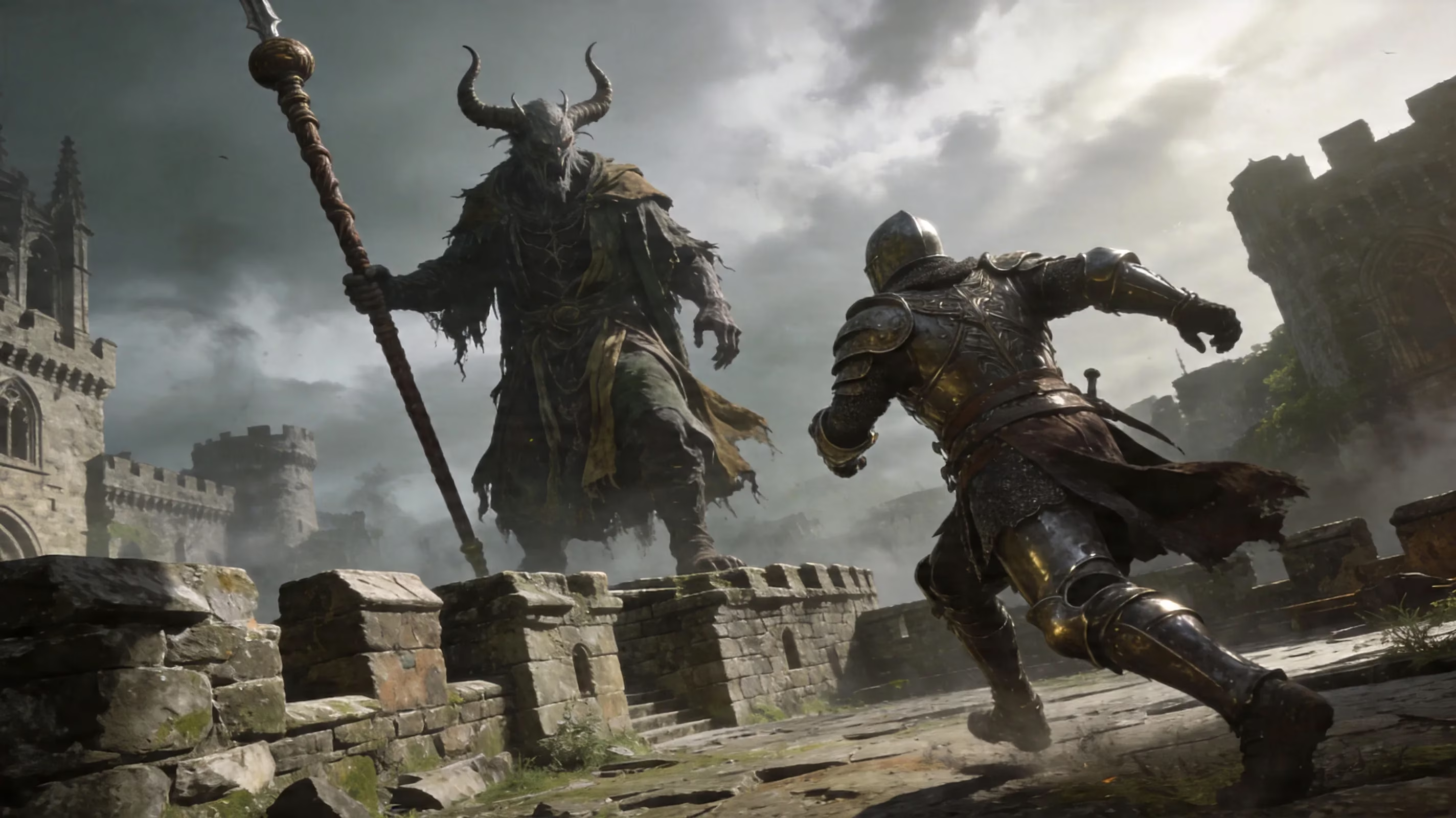
Exploration also stretches the clock in ways you don’t always notice right away. Legacy dungeons like Raya Lucaria and Volcano Manor have enough side paths and optional sections to double your time there if you’re thorough. And then you have fully optional late-game areas like the Consecrated Snowfield, which leads into Miquella’s Haligtree and Elphael, Brace of the Haligtree. Those zones can add 8 to 12 hours on their own.
A lot of the extra time comes from the hidden stuff too:
-
Farming runes when your build is underpowered
-
Repeated deaths on major bosses
-
Backtracking for missed items, NPCs, or map fragments
-
Detours into caves, catacombs, and underground regions
That’s why two players can follow roughly the same route and still finish with wildly different totals.
Fastest Route to Beat Elden Ring
If your goal is to clear Elden Ring as fast as possible without going into full speedrun territory, the key is sticking to the critical path. That means beating Margit and Godrick in Stormveil, taking down Rennala in Raya Lucaria, defeating Morgott in Leyndell, then pushing through the Fire Giant and the final boss sequence in Farum Azula and the Erdtree. A lot of famous bosses are not actually required for the main ending.
That includes Rykard, Starscourge Radahn, and Malenia. All three are optional from a pure completion standpoint, though Radahn still matters for certain questlines. If you skip them, you shave off a huge amount of time.
The biggest time-saving move is avoiding entire optional regions. For a fast route, you can skip:
-
Most of Caelid’s optional content
-
Ainsel River and the Lake of Rot
-
Nokron, Eternal City
-
The Consecrated Snowfield
-
Most of the Mountaintops beyond the Fire Giant path
That trims Elden Ring down to its essentials.
For a realistic fast clear, you’ll usually want to be around level 80 to 100 with a weapon at roughly +15 standard or +6 somber before the final stretch. As for strong fast builds in 2026, a Rivers of Blood Arcane setup still performs extremely well against mandatory bosses, and Dragon Communion Faith builds remain excellent for deleting health bars quickly. If you want something simpler and more consistent, a pure Strength build using a Heavy Greatsword with Stamp (Upward Cut) is still one of the safest low-complexity picks around.
Realistic Elden Ring Time Estimates
For players who mostly game on weekends, Elden Ring’s pacing is actually pretty manageable. If you’re putting in six to eight hours across a weekend, a main-story run is usually doable in about three to four weekends. With shorter sessions during the week, things stretch out more. Elden Ring doesn’t always feel great in tiny chunks, especially in places like Stormveil Castle where remembering routes and enemy placements matters a lot.
If you’re only playing about an hour at a time, expect the game to feel slower than the raw hour count suggests. You can absolutely make progress that way, but legacy dungeons and boss-learning sessions are usually smoother when you have two or three uninterrupted hours to work with.
Here’s a practical way to think about your goals:
| Goal | What You Can Realistically Finish |
|---|---|
| 30 hours | Limgrave, Liurnia, Margit, Godrick, Rennala, and the start of Altus Plateau |
| 60 hours | Most of the main story plus major optional fights like Radahn and Mohg |
| 100 hours | Nearly all base-game content, most underground areas, and many NPC questlines |
If you’re planning to include the DLC, the cleanest approach is usually to finish the base game first, get your character to around level 120 to 150, and enter the Land of Shadow with a fully upgraded weapon. Treating the expansion as its own arc just feels better. It also avoids the awkward difficulty mismatch that can happen if you jump into endgame DLC halfway through a first playthrough.
Shadow of the Erdtree Playtime
Shadow of the Erdtree adds a serious amount of content, so it changes the total playtime picture quite a bit. If you stay mostly on the main path, move with purpose, and use the map well, the DLC usually takes around 20 to 30 hours. That includes progressing through the Land of Shadow, defeating Messmer the Impaler, clearing the major legacy dungeons, and reaching the final encounter.
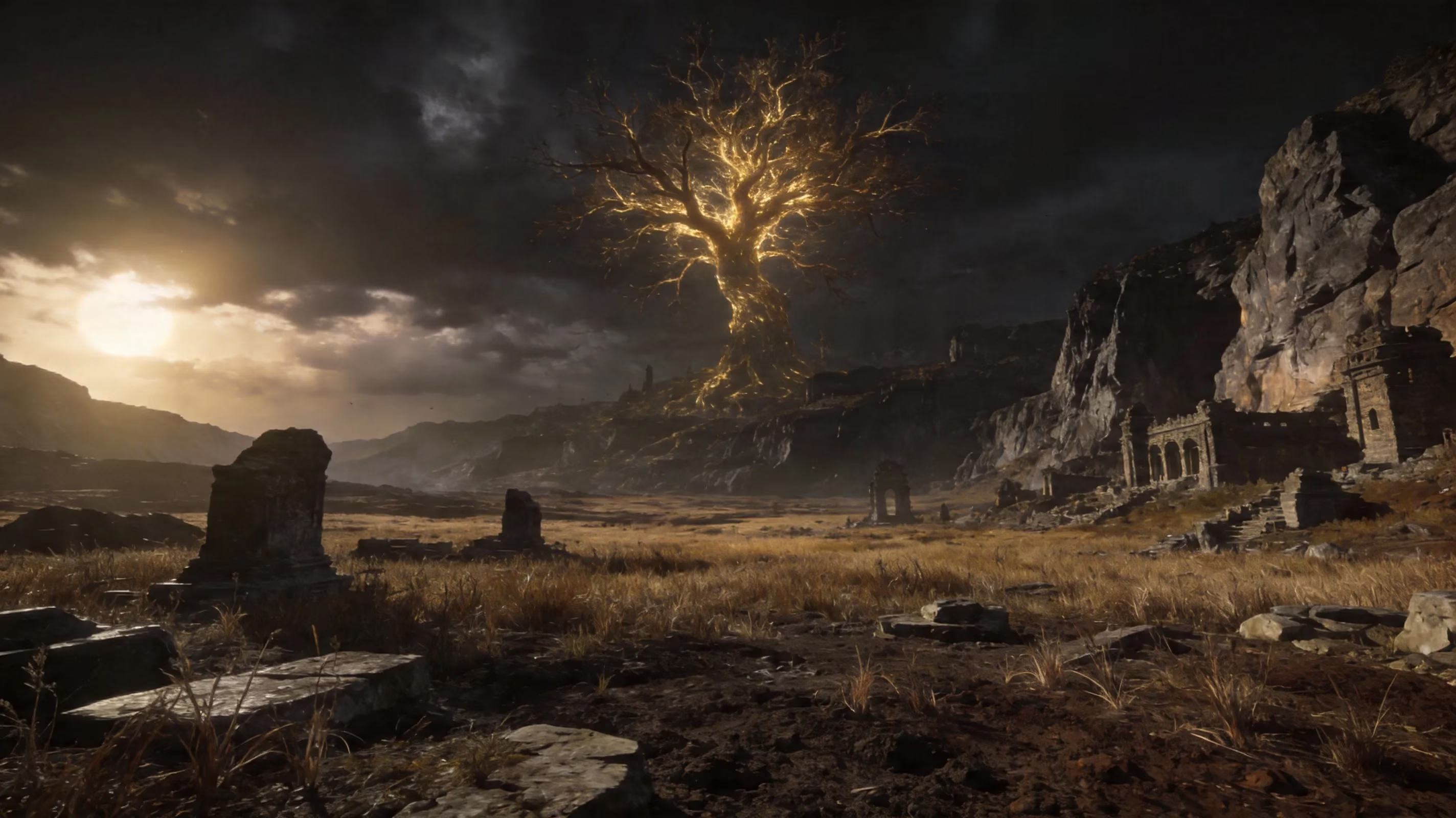
If you explore it properly, though, the number climbs fast. Full DLC exploration — including catacombs, hidden routes, optional bosses like Bayle the Dread, and side content — usually lands in the 35 to 50 hour range. The Land of Shadow is much more vertical than the base game, and that layered design makes it incredibly easy to miss whole sections unless you’re checking every cliffside, tunnel, and suspicious wall.
The biggest factor in DLC pacing is the Scadutree Fragment system. This is the expansion’s core progression mechanic, and it directly changes how long fights take. Every fragment you collect and activate at a Site of Grace boosts your damage and damage negation inside the DLC. If you rush bosses without collecting enough fragments, even mid-tier encounters can turn into brutal time sinks. If you explore thoroughly and upgrade your blessing level, the DLC becomes much more manageable.
For most players, the best entry point is still level 120 to 150 with a maxed weapon — +25 standard or +10 somber. Going in under that threshold is possible, but it usually means longer fights, more failed attempts, and a much slower overall clear.
Conclusion
For most players asking how long to beat Elden Ring in 2026, the best estimate is pretty straightforward: a focused main-story run takes about 50 to 60 hours, a first real exploration-heavy playthrough usually lands around 80 to 120 hours, and adding Shadow of the Erdtree adds another 25 to 50 hours depending on how thoroughly you play. If you’re aiming to do basically everything in both the base game and the DLC, expect 180 to 200+ hours.
If it’s your first time, blind exploration is still the most rewarding way to do it. Yes, it takes longer. Yes, some bosses are going to flatten you for a while. But Elden Ring is at its best when you let curiosity lead the run. Whether you want a tight critical-path clear or a massive 100-hour trek through every corner of the Lands Between, there’s no wrong pace here — just the one that makes the journey feel worth it.