Let me scream this from the top of Death Mountain until the Goddesses themselves hear me: every single person who dismisses The Adventure of Link as the black sheep of the Zelda franchise needs to be banished to the Dark World for a decade of reflection. As a grizzled veteran who has triple-crowned every dungeon from the NES masterpieces to Tears of the Kingdom, I can tell you right now that this 1987 oddity isn’t just some bizarre tangent—it’s the radioactive core from which so much of Hyrule’s soul springs. By Hylia, I’m going to crack this crimson-coffered crypt of a game wide open and show you why, in 2026, we owe nearly everything to its beautifully unhinged experimentation.
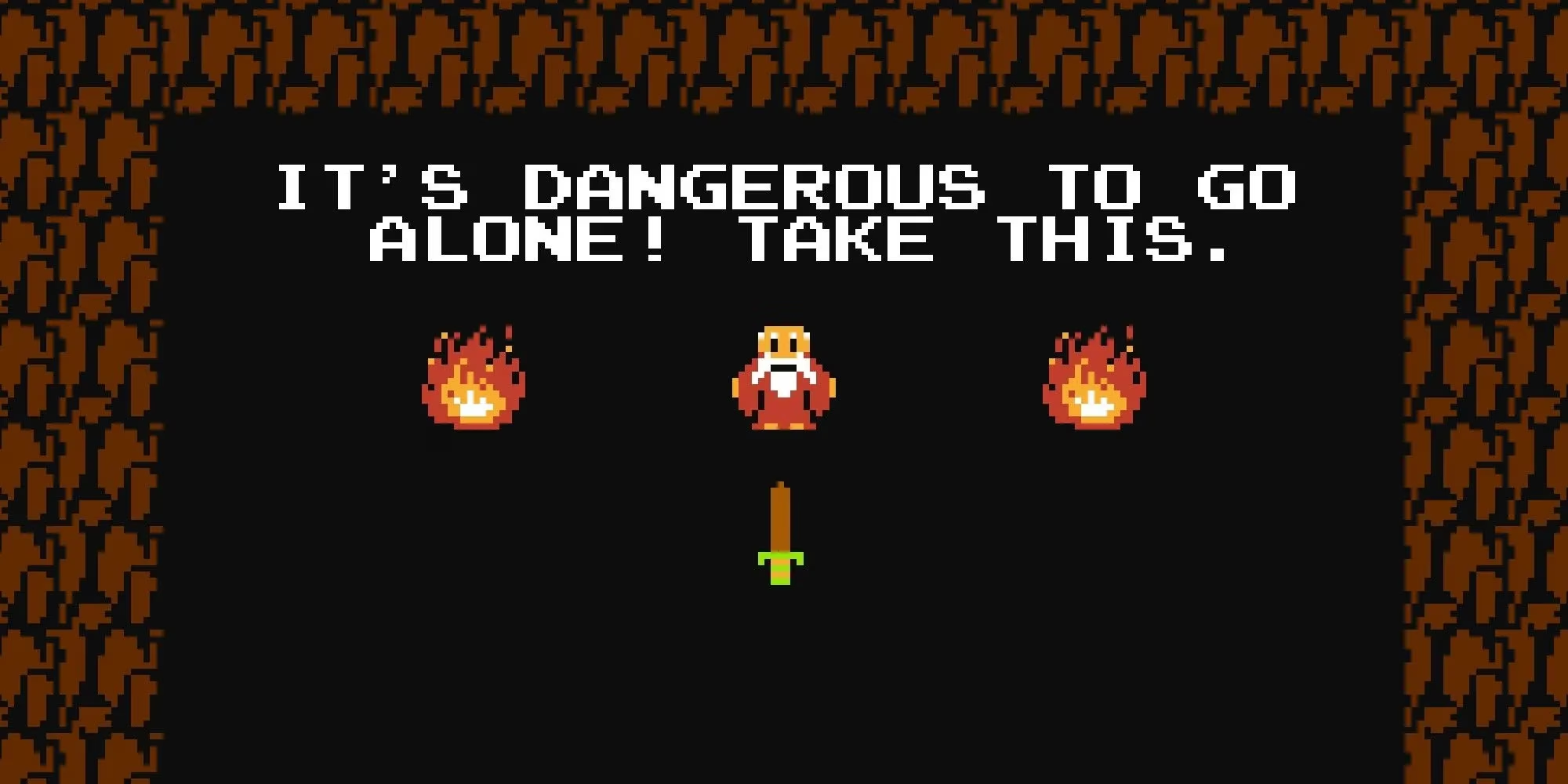
Back in the primordial goo of gaming, the very first The Legend of Zelda was a blinding supernova. It sold over a million copies in its debut week across Japan, rocketed to two million stateside within two years, and critics genuflected before its symphonic dungeon crawls and Koji Kondo’s immortal earworms. It should have been a sacred blueprint, right? WRONG. Shigeru Miyamoto, that whimsical chaos deity, stared at his gold cartridge monolith and decided, “Let’s detonate everything.” At the time, the series didn’t even have a solidified brand identity—think about that. The very name “Zelda” still felt experimental, a flickering fairy light, and yet the sequel’s audacity was so thermonuclear that it was originally going to be marketed as a spinoff. Let that sink in. The very concept of a direct follow-up was so alien that the team only slapped “Zelda II” onto it once they realized they wanted to age Link and Zelda a few years and call it a chronological successor. That’s the kind of raw, unshackled creativity that today’s risk-averse AAA landscape would euthanize on sight.
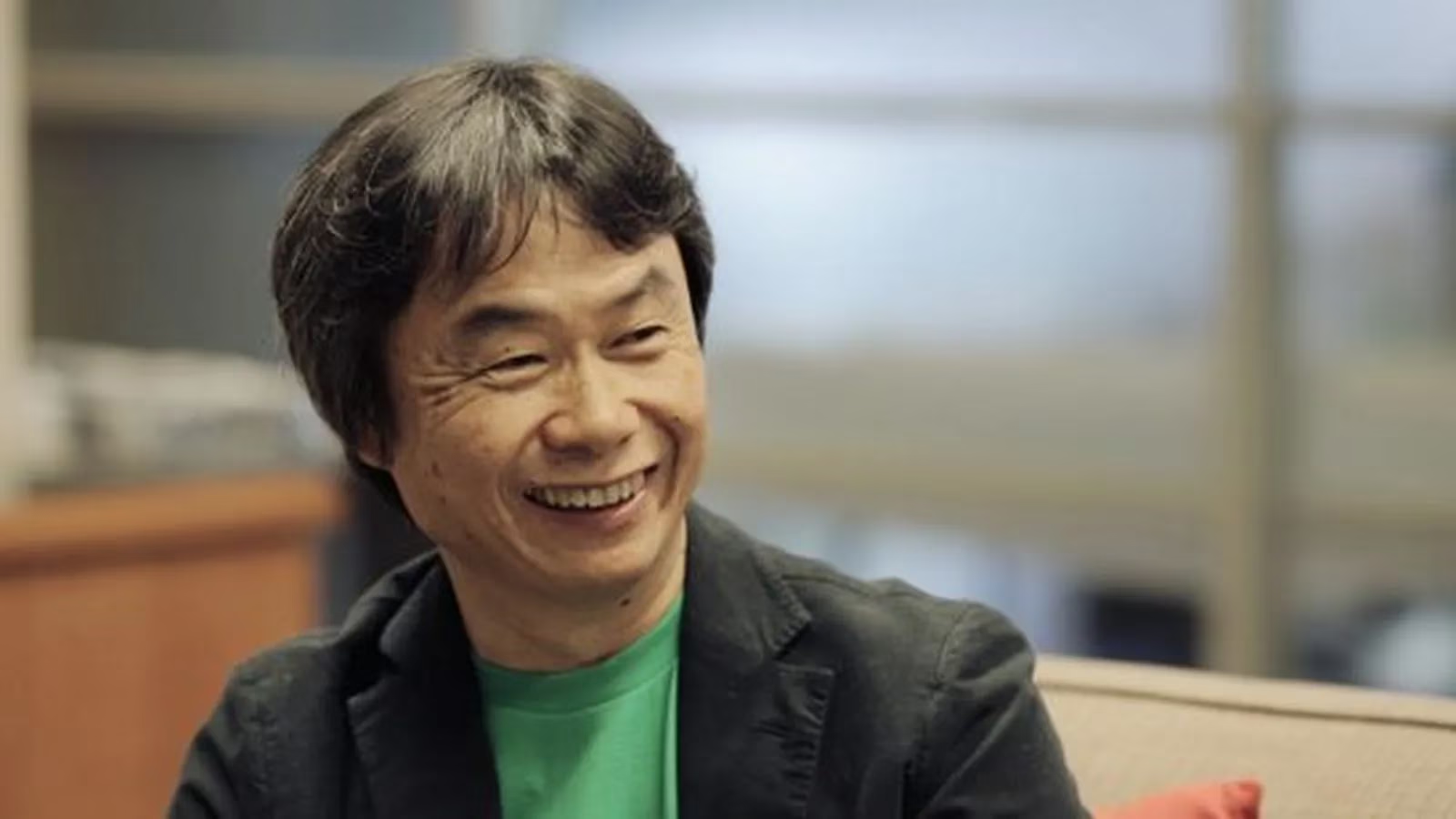
But let’s not pretend the connective tissue was all severed. I hear the blasphemers constantly bleating that Adventure of Link is a total alien artifact. Poppycock! Dungeons? They’re back, and more ruthless than ever. An overworld? Present, albeit one that pivots into those infamous side-scrolling combat arenas the moment danger strikes. Our green-clad hero still swings a blade, brandishes a shield, and hoards sacred relics of world-bending power. Link, Zelda, Impa, and the porcine demon Ganon all slither into the plot. For a nascent franchise in 1987, this was a substantial carryover, a brazen evolution rather than a clean break. The real volcanic shift happened behind the curtain, where Miyamoto and his right-hand maestro Takashi Tezuka largely stepped back, handing the director’s torch to Tadashi Sugiyama and Yasuhisa Yamamura. In an era where core teams could be counted on two hands, swapping directors was tantamount to swapping entire dimensions. The whole affair became a laboratory where no idea was too profane—experience points, a feat-shouting downward thrust, towering palace guardians that made the original’s bosses look like sleepy octoroks.
Now, here’s where my hype goes full divine beast mode. People love to compare Zelda II to Final Fantasy II as that other “weird sequel,” but both are trojan horses of genius that injected their series with immortal DNA. The Adventure of Link didn’t just diverge for the sake of being contrarian; it birthed foundational pillars that every subsequent game has shamelessly plundered. The Triforce of Courage? Yeah, that glowing third triangle of destiny was a Zelda II baby. The very idea that our boy Link could learn and cast magic—from the Shield spell that made him a steel wall to the terrifying Fairy transformation—was born right here. Before this, the original game had Link solving problems purely with item gadgets; this adventure gave him an internal mana pool and a full spellbook, a mechanic that has since been twisted into Champion abilities, Sheikah Slate runes, and Zonai constructs.
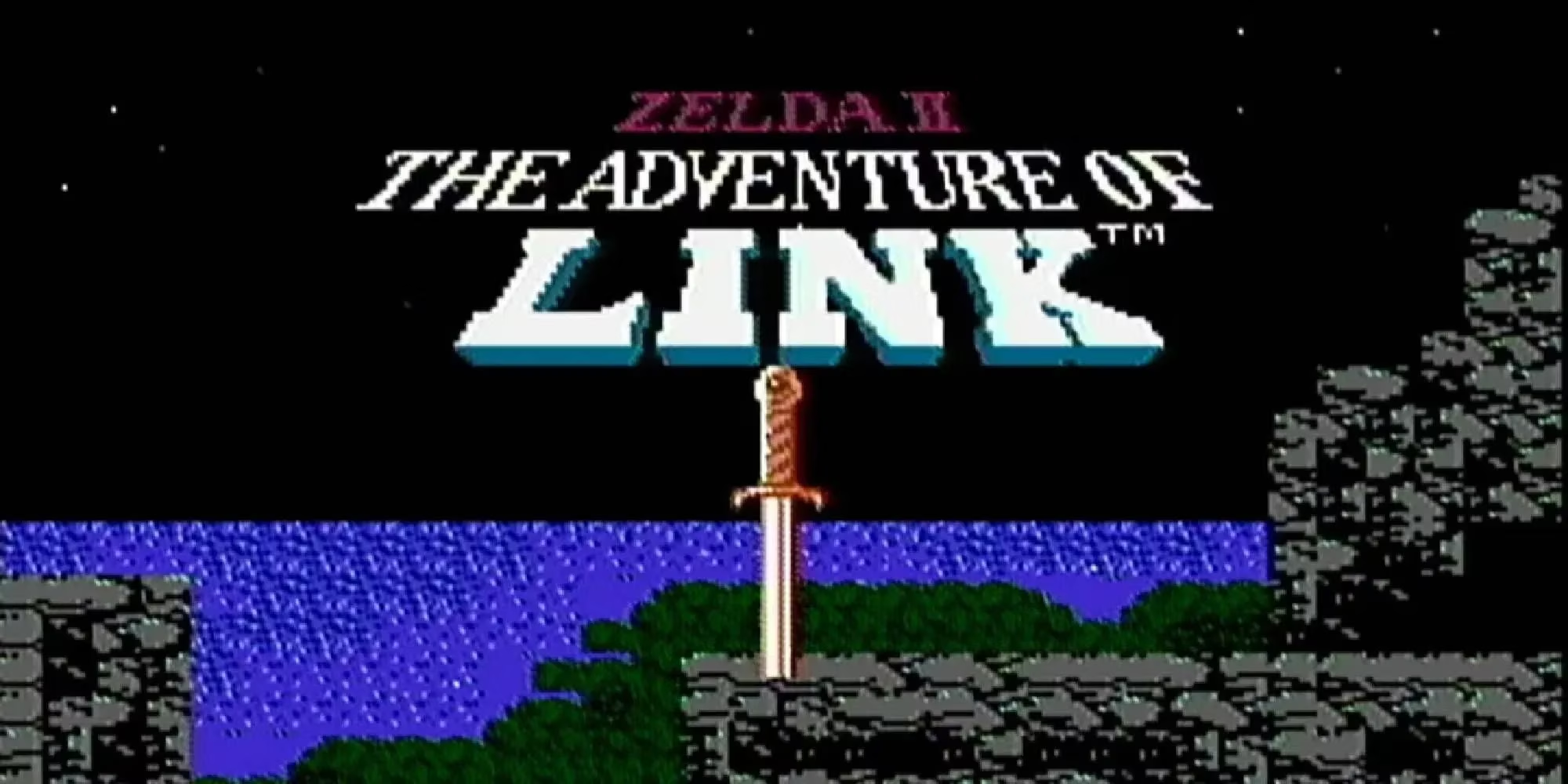
And it goes deeper. Remember the seven Sages who backed you up in Ocarina of Time? During development of that landmark classic, those very sages were named after the towns from Adventure of Link—Rauru, Saria, Darunia, Ruto, Nabooru, Impa, and the rest. Those weren’t just random syllables; they were the settlements that speckled the map of this maligned sequel, the first true villages in Hyrule’s history because the very first game didn’t even have a populated hub. Then there’s the shadowy spectre that still gives us chills: Dark Link. Before he was the clone that mirrored your every swing in the Water Temple, he was Link’s Shadow, a silent, pitch-black nemesis serving as the final test in the Great Palace. That concept of a corrupted reflection, an anti-hero born from the hero’s own essence, has echoed through Four Swords Adventures, Twilight Princess, and even A Link Between Worlds. It’s a psychological horror gift that keeps on giving.
But here’s the kicker, the absolute mic-drop revelation that ties 1987 directly to our current Switch-cartridge-clutching hands in 2026. Who is the ultimate threat looming over both Breath of the Wild and Tears of the Kingdom? It’s a resurrecting demon king. Ganon’s ability to claw back from death, to become a calamitous force that transcends mere mortal vessel, is a concept Zelda II hammered into the series’ skull. The entire plot revolves around his minions trying to sacrifice Link and sprinkle his blood on the ashes of the Dark Lord to trigger a monstrous rebirth. Calamity Ganon, the Gloom-born menace, the cycle of destruction that the Zonai struggled against—all of it traces a direct bloodline back to that NES side-scroller’s morbid obsession with preventing a dark resurrection.
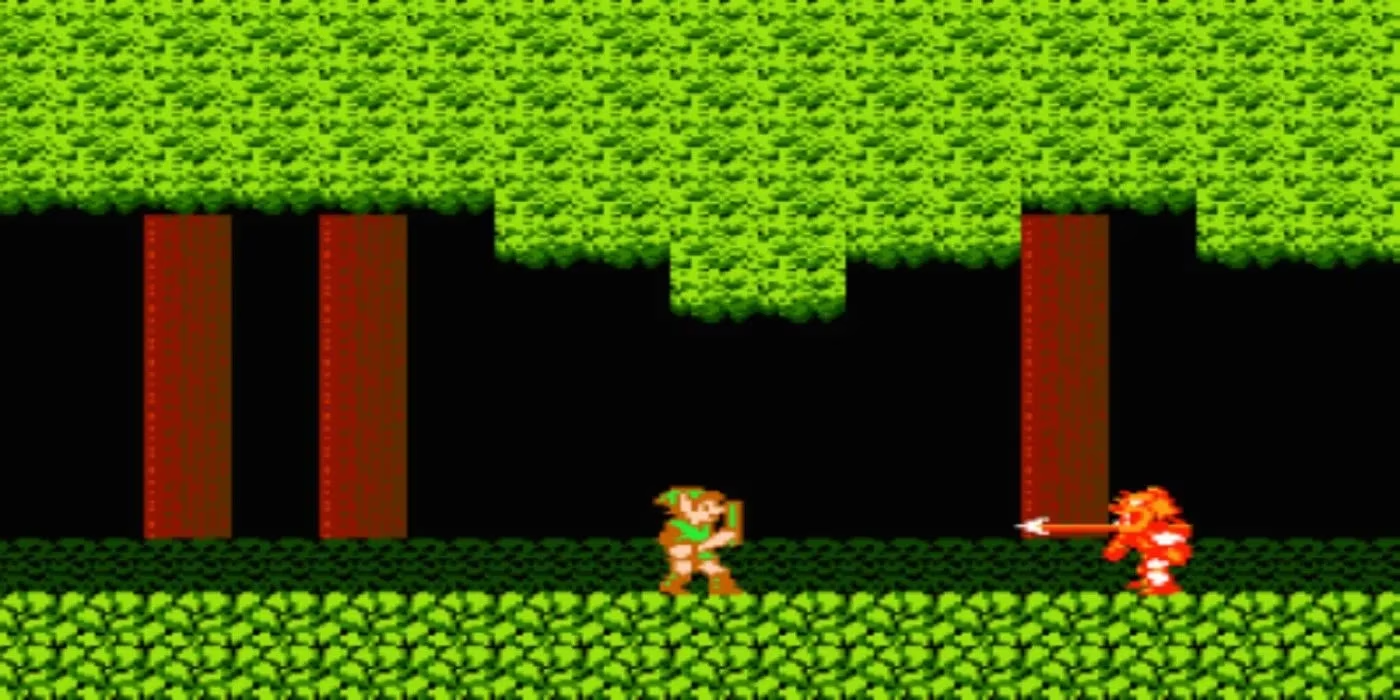
Sure, A Link to the Past course-corrected back to the top-down formula, and that decision catapulted the franchise into mainstream godhood. Adventure of Link didn’t set the sales charts on fire to the same degree as its predecessor, and I half-suspect its brisk difficulty and radical framework made the Nintendo brass break out in cold sweats. But to call it a misstep is a sin of the highest order. Every time you activate a Stasis rune, every time you battle a doppelganger, every time you hear a sage’s name echo through a temple, you are brushing against the spiritual residue of this eccentric masterpiece. It was the crucible where the series’ true, sprawling identity was forged—not a safe, carbon-copy sequel, but a mad alchemical experiment that pumped courage, magic, and a legion of dark shadows into Hyrule’s veins forever. Scream you want, haters; I’ll be over here head-bobbing to the Palace Theme and casting Reflect on your bad takes until the next blood moon rises.