As a lifelong Legend of Zelda fan, I still remember the first time I pulled out the Ocarina of Time and played the Song of Storms. That feeling of agency, of shaping the world through music, has stayed with me for decades. So when I roamed the vast fields of Breath of the Wild and climbed skyward into Tears of the Kingdom, something felt subtly absent. Don't get me wrong—these games are masterpieces, overflowing with innovation and nostalgia. I’ve built flying machines, fused arrows with ancient blades, and lost myself for hours in the sheer beauty of Hyrule. But while these titles celebrate so much of the franchise’s legacy, one traditional mechanic has been left behind: Link playing a musical instrument.
That missing piece hit me hard as I watched the Stable Trotters perform, their little violins and drums filling the air. Violynne even plays a violin that looks remarkably like something Link himself could wield. Yet I couldn't join in. The hero who once summoned storms, teleported across worlds, and even turned day to night with a few notes simply stood there like a mute traveler. It’s time for the next Legend of Zelda game to fix this, and I believe the Nintendo Switch 2 era offers the perfect stage.
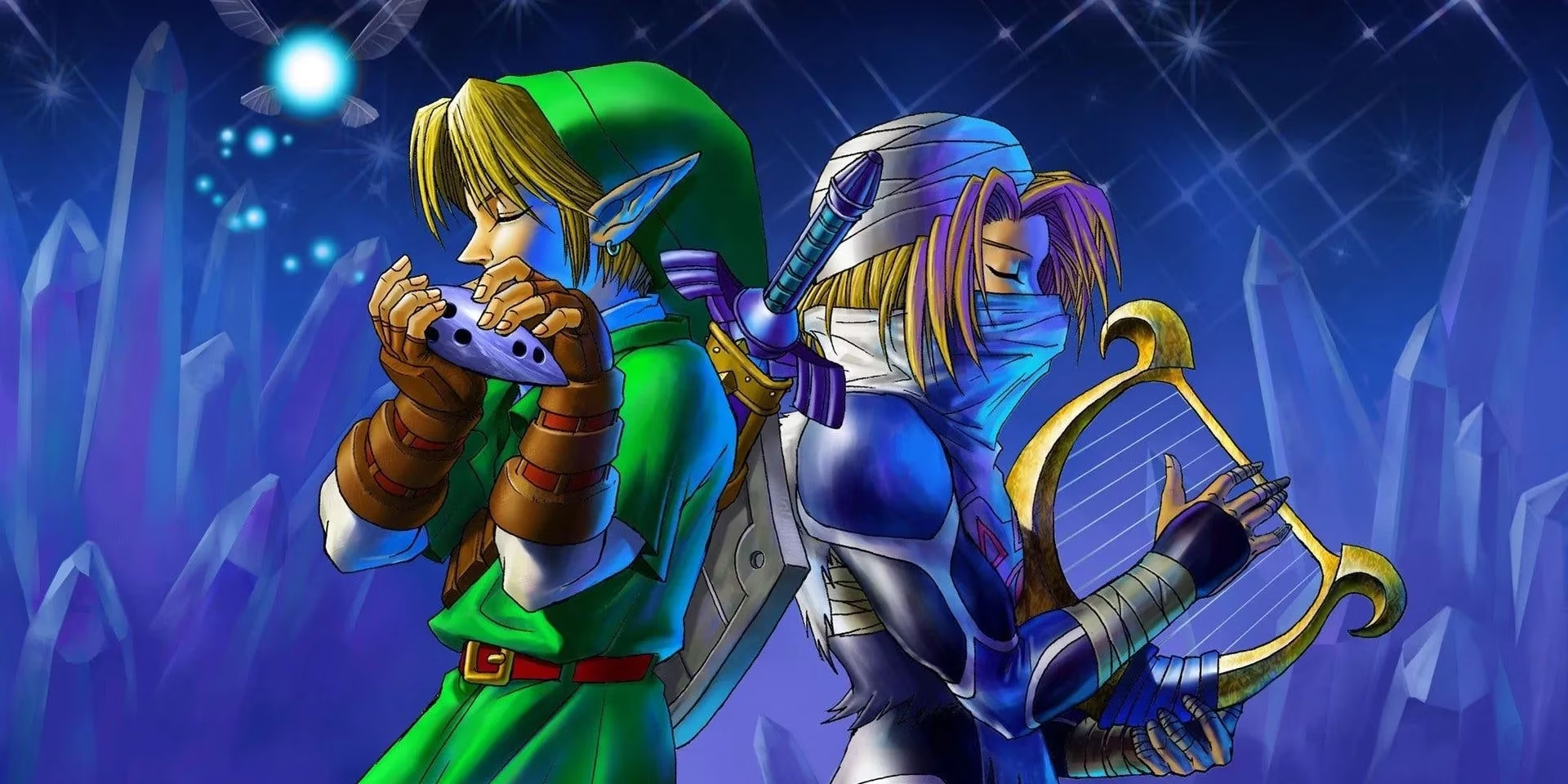
Music has always been one of the most enduring pillars of the series. The Ocarina of Time gave us a full repertoire of magical songs, each unlocking a new ability—calling Epona, opening the Temple of Time, or warping to far-flung locations. Majora’s Mask transformed instruments into the core of its transformative masks and haunting melodies. The Wind Waker let us conduct the very winds with a baton, and Spirit Tracks turned a set of pan pipes into a lifeline for its spirit-flute duets. Even Skyward Sword placed the Goddess Harp at the center of its emotional and puzzle-solving moments. Each instrument made us feel like an active participant in Hyrule’s mythology, not just a warrior swinging a sword.
In Breath of the Wild and Tears of the Kingdom, the Sheikah Slate and Rauru’s Arm gave us incredible powers right from the start. I respect that design choice—it encourages experimentation—but it also means there’s little sense of gradual musical growth. Imagine entering a new region in the next Zelda and learning a local folk song that calms a raging river or reveals hidden shrines. Instead of unlocking runes in a menu, you’d earn new melodies by interacting with characters, deciphering ancient sheet music, or even listening to the environment. The instrument would become your Swiss Army knife of magic, slowly expanding your toolkit in a way that echoes the best of older titles while feeling fresh.
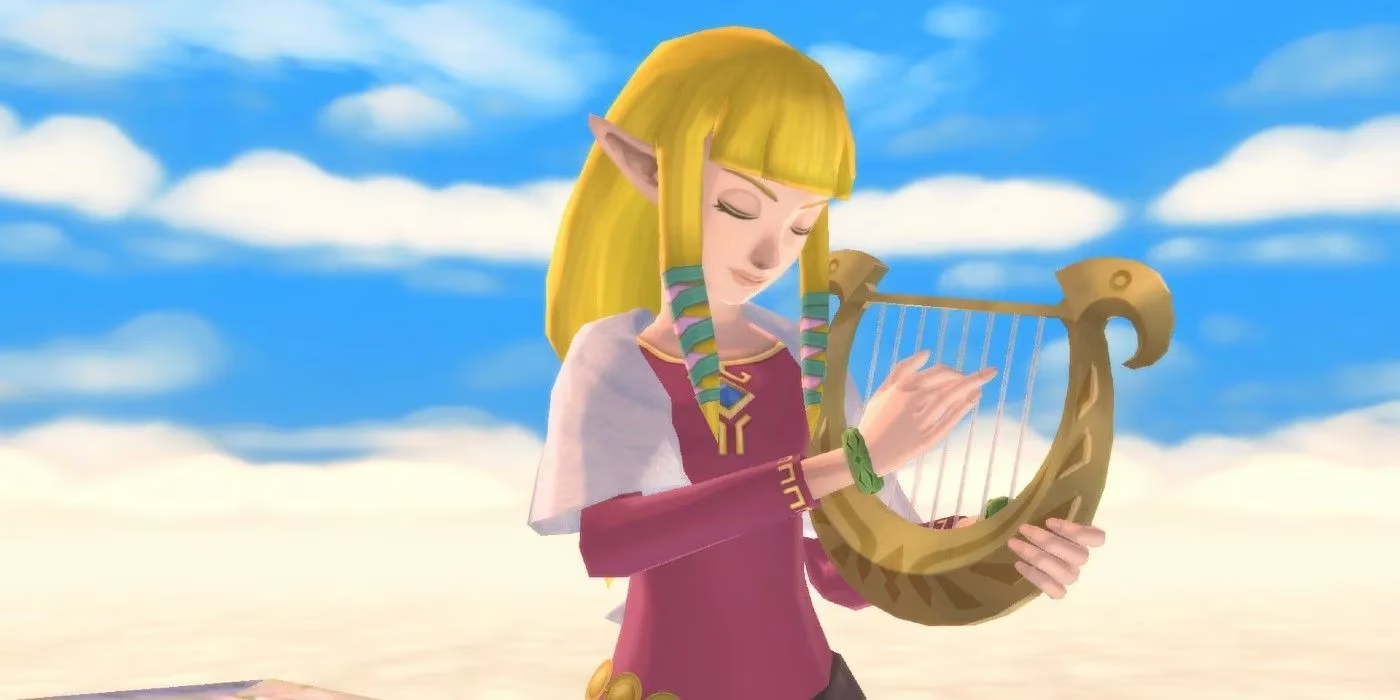
Now, let’s talk hardware, because the Switch 2 (launching just last year in 2025) could make playing an instrument feel tactile and immersive. The original Switch already proved motion controls can be subtle; in Skyward Sword HD, I actually enjoyed rhythmically strumming the harp with the Joy-Con. The next console’s more responsive motion sensors could let us bow a violin, blow into a digital pan pipe via the controller’s microphone, or wave a conductor’s baton to sculpt weather patterns. Even simple button combos on a guitar-style interface would feel satisfying—hold a chord on the left side, strum with the right, and suddenly you’re composing a lullaby for a sleeping Hinox.
What instrument would I choose? The article mentions possibilities that make me giddy. A set of pan pipes like in Spirit Tracks would fit a wilderness survival tone, each note echoing off canyon walls. A conductor’s baton—the Wind Waker itself—could return, allowing us to draw intricate patterns in the air to cast spells. But my personal dream? An acoustic guitar. Hyrule now has stables with traveling musicians, and a battered six-string would look right at home on Link’s back. The Stable Trotters even have a violinist; clearly, orchestral instruments exist. A violin bow drawn across strings with motion control would be sublime, especially if the game rewarded precise pitch for puzzle solving.
Of course, I don’t want to ignore how Breath of the Wild and Tears of the Kingdom revolutionized sound design. The minimalistic piano strokes in the fields, the swelling battle themes, the haunting echoes in the Depths—they’re masterful. But that’s a passive kind of beauty. The interactive magic of making your own music, of actively weaving a melody into gameplay, is something entirely different. When I played the Song of Healing in Majora’s Mask and saw a tormented soul find peace, I wasn’t just listening; I was a conduit for the story. That emotional resonance is missing from the latest entries, and it’s exactly what we need back.
Some might argue that an instrument doesn’t fit with the new open-air philosophy. I disagree. The Zonai Devices already proved that creative player expression is the new heart of the series. Adding a musical layer would deepen that. Picture this: you find a damaged bridge. You could use Ultrahand and some planks, or you could play an ancient song that makes vines grow and weave themselves into a temporary crossing. Your choice. It’s about giving us more ways to interact with the world, and music is the most Zelda way possible.
Nintendo, if you’re listening, please give Link back his instrument. Let the next Legend be one we not only see and fight through, but one we hum to ourselves long after we put down the controller. I’m ready to learn new songs, to experiment with melodies under a blood moon, and to once again feel that magical connection between musician and world. Who knows—maybe by 2027, we’ll all be arguing over whether the new Ganondorf theme is better when played on a guitar or a harp.