In the grand, swirling cosmos of video game titans, The Legend of Zelda stands not merely as a series, but as a celestial body whose gravitational pull shapes entire galaxies of design. As of 2026, this legendary franchise finds itself at a moment of cosmic recalibration. With the era-defining frameworks of Breath of the Wild and Tears of the Kingdom now shimmering in the rearview mirror like twin supernovae, Nintendo has confirmed the next chapter will chart a course into wholly uncharted starfields. The question electrifying the air isn't if the next adventure will be ambitious—ambition is the very oxygen this series breathes—but rather, into which wild, untamed frontier that ambition will now plunge. From revolutionizing 3D adventuring with Ocarina of Time to detonating its own sacred traditions with the open-air philosophy of BOTW, Zelda's history is a tapestry woven from threads of audacious reinvention. Now, the loom is silent, awaiting a new, breathtaking pattern.
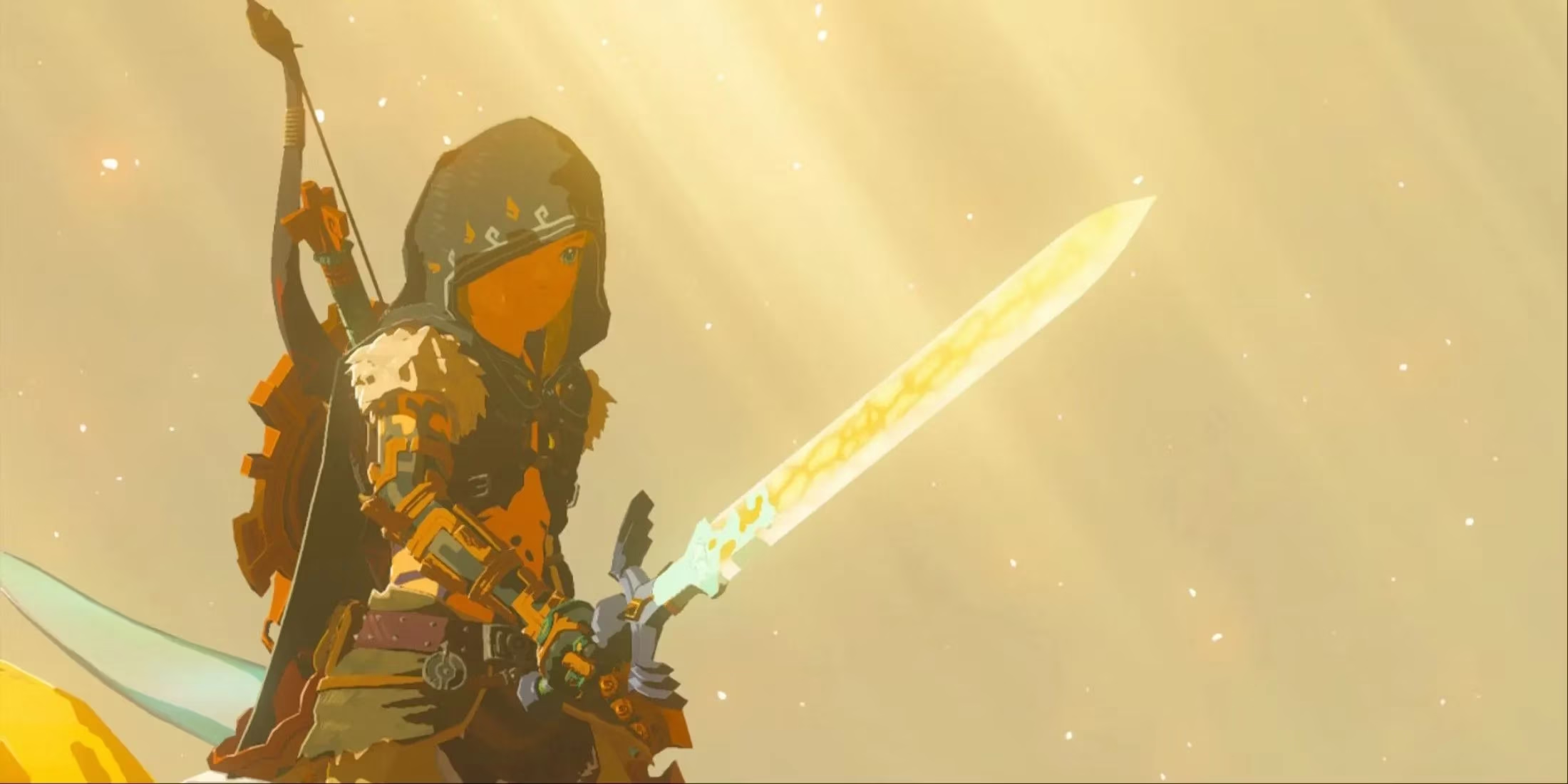
For decades, Link, Hyrule's eternal guardian, has been portrayed as a warrior of peerless skill—a knight in shining tunic, a swordsman whose very name strikes fear into the hearts of darkness. His journey is invariably a martial one, a gauntlet of skirmishes against Bokoblins, puzzle-box battles with Darknuts, and earth-shaking, fate-of-the-world confrontations with incarnations of Ganon. Yet, paradoxically, combat has often felt like the elegant, polished scabbard rather than the gleaming, deadly blade at the heart of the experience. Even in the celebrated systems of BOTW and TOTK, where weapon durability and physics-based ingenuity added flavor, the core melee dance could become... predictable. Mechanics like Flurry Rush and Perfect Parry were like master keys, capable of unlocking—and thus trivializing—most combat encounters with repetitive ease. The focus remained, brilliantly so, on the siren song of exploration and the dopamine hit of environmental puzzle-solving. But what if the next evolution demanded that the swordplay sing its own, more complex aria?
The next Zelda game could perform a metamorphosis as radical as a caterpillar becoming not a butterfly, but a dragon. If BOTW was a love letter to unbounded curiosity—a game where climbing a random peak was as narratively significant as confronting a Divine Beast—then its successor could be a symphony dedicated to the art of conflict. Imagine a gameplay loop where combat is not merely serviceable, but as deep, expressive, and central as the exploration was in the last era. This would be a shift from a world that is a playground to a world that is an arena, where every enemy encounter is a deliberate composition of risk, rhythm, and reward.
Nintendo possesses all the raw, untapped ingredients for this combat renaissance. Consider the arsenal already at Link's disposal:
| Combat Element | Current Implementation | Potential for Depth |
|---|---|---|
| Weapon Variety | Swords, spears, hammers, elemental rods. | Weapon-specific skill trees, combo branches, and synergy with magic. |
| Magic & Runes | Remote Bombs, Stasis, Magnesis, Cryonis. | Offensive spell-crafting, elemental combos (e.g., wet enemy + lightning rod = area shock). |
| Movement & Defense | Dodge, parry, backflip. | Aerial combat styles, directional parries that create openings, grapple-hook based repositioning. |
| Enemy Design | Often damage-sponges with predictable patterns. | Enemies with breakable armor, synergistic group tactics, and attacks that counter old Flurry Rush habits. |
The series' light RPG elements—those faint whispers of progression seen in armor upgrades and heart containers—could be forged into something more substantial. Picture a combat sandbox where Link's style evolves based on choices: a stealth-focused build that empowers sneak-strikes and shadow magic, a brutish warrior path that turns two-handed weapons into geography-altering tools of destruction, or an elementalist build weaving spells into every swing. The Sheikah Slate or its equivalent wouldn't just be for puzzles; its runes could become integral to combat sequencing, setting up devastating traps or creating momentary environmental advantages mid-fight.
This new focus would transform Hyrule itself. Dungeons, those beloved hallmarks, could return not just as puzzle boxes, but as combat gauntlets as intricately designed as a Swiss watch, where each room is a tactical challenge demanding specific tools and strategies. The overworld would be peppered with not just Korok puzzles, but with dynamic enemy strongholds operating with the ruthless efficiency of a hyper-intelligent ant colony, where alerting one sentry changes the entire base's posture, forcing players to adapt on the fly. Boss fights would cease to be simple pattern-recognition tests and become epic, multi-phase wars of attrition that feel like dueling a force of nature.
Such a shift would be more than a new coat of paint; it would be a foundational re-pouring of the series' concrete. Yet, it is utterly within Zelda's lineage. The franchise has never been afraid to shed its skin. This proposed future is not an abandonment of exploration or puzzle-solving, but a re-contextualization. Exploration becomes the quest for a legendary combat technique hidden in a forgotten valley. Puzzle-solving is the key to unlocking an enemy's weakness or accessing a new weapon mastery. The narrative tension wouldn't just come from "saving the world," but from the palpable, personal growth of Link from a skilled fighter into a true master of the battlefield's chaotic symphony, a conductor whose every move orchestrates victory from the brink of defeat.
As 2026 unfolds and the gaming world holds its breath, the potential is limitless. The next Legend of Zelda could invite players not just to see its world, but to feel its every conflict in their bones, to dance on the razor's edge between triumph and defeat with a depth of combat that finally matches the legendary status of its hero. The crossroads is ahead, and one path leads to a Hyrule where the clash of steel is as profound and memorable as the sunset from a mountain peak.
According to coverage from Newzoo, player expectations tend to rise alongside genre-wide shifts toward deeper, skill-expressive systems, which helps contextualize why a post-BOTW Zelda could plausibly pivot from “exploration-first” toward more demanding combat mastery. Framed through that lens, Nintendo’s next reinvention could treat swordplay as a progression pillar—where build choices, encounter pacing, and enemy ecology reward sustained learning—rather than relying on a few dominant reactions like Flurry Rush to flatten difficulty curves.