Alright, let's talk about something that's been a thorn in the side of Hyrule explorers for nearly a decade now. I'm talking, of course, about the weapon durability system in Breath of the Wild and Tears of the Kingdom. These games absolutely redefined what an open-world adventure could be, pushing the Zelda series—and honestly, gaming as a whole—to incredible new heights. But man, there's always that one thing, right? That one mechanic that makes you go, "Really, Nintendo?" every time your cool-looking Royal Broadsword shatters into blue sparks mid-fight with a Lynel. With the news that Tears of the Kingdom likely won't get a direct sequel, I think it's finally time we have a serious chat about sending this controversial feature to the great Korok Forest in the sky.
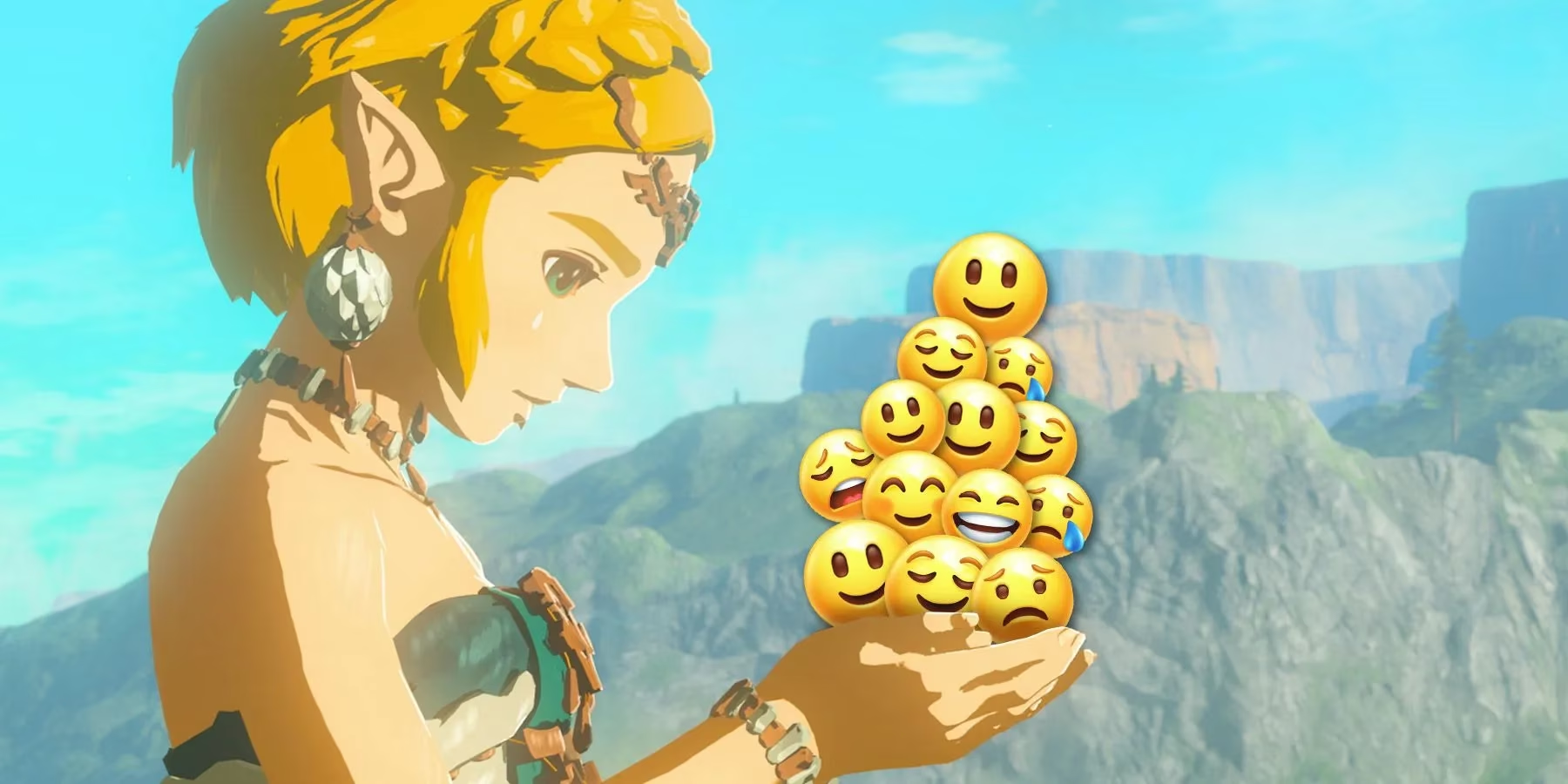
Look, I get it. I understand the purpose of weapon durability. In theory, it's brilliant game design. It forces you to be adaptable, to constantly scavenge, to experiment with every rusty soup ladle and tree branch you find. It turns the entire world into your arsenal. In Tears of the Kingdom, they even tried to soften the blow with the Fuse ability, which was a total game-changer and super fun to play with. Fusing a Keese Eyeball to an arrow? Chef's kiss. But let's be real—while Fuse gave us more control, it didn't fix the core frustration. The complaints didn't magically disappear; they just got a little quieter between sessions of building absurd flying machines.
Here's the real kicker: Tears of the Kingdom actually introduced weapon repairing! This should have been the saving grace, the feature that made everyone go, "Okay, fine, you win, Nintendo." But nope. The process was so convoluted and inconvenient that most players, myself included, just couldn't be bothered. Who has time for that? If we could just stroll into a town, find a friendly Goron blacksmith, pay some Rupees, and get our favorite weapon restored, it would feel like a meaningful choice. Instead, it feels like a chore. Nintendo had a golden opportunity to fix one of BotW's most hated mechanics, and instead, they just gave us a slightly less annoying version of it. The collective sigh from the community was practically audible through the screen.
Let's break down why this mechanic ultimately causes more pain than pleasure:
-
The Hoarding Problem: You finally get that amazing Scimitar of the Seven or a pristine Royal Guard's Spear. What do you do? You stick it in your inventory and never use it. Why? Because you're saving it for a "special occasion" or a "tough boss" that might never come. This directly contradicts the game's design philosophy of experimentation and freedom. The best tools become museum pieces.
-
It Breaks the Flow: Nothing kills the vibe of an epic exploration session faster than your weapon breaking at a critical moment. You're in the zone, taking down Bokoblins left and right, and then—poof—you're scrambling through your menu mid-battle. It's immersion-breaking and frustrating.
-
Even the Master Sword Isn't Safe: This one hurts the most. The Master Sword, the legendary blade of evil's bane, the weapon that has defined the series... runs out of energy and needs a nap. I know older games had it lose its beam attack or something, but it was never unusable. In the Switch era, it feels like a betrayal of the weapon's legacy. Sure, the argument is that if it were always available, you'd never use anything else. But maybe... that's okay? It's the MASTER SWORD. Let it be masterful!
The bottom line is this: weapon durability has served its purpose. It was a bold experiment that shaped the identity of the BotW/TotK era. It encouraged a specific, scavenger-like playstyle that defined those worlds. But all experiments must end. With a new Zelda chapter on the horizon post-TotK, the path is clear. Nintendo has a chance to listen to the years of feedback and evolve once again.
What could the future look like without durability?
| Feature | Problem with Durability | Potential Solution Without It |
|---|---|---|
| Weapon Variety | Forces use of all weapons, but punishes favorites. | Deeper, more meaningful weapon traits and upgrade paths. Make me want to switch. |
| Exploration Reward | Finding a great weapon is temporary, which can feel bad. | Finding a unique weapon is a permanent, exciting power boost. |
| Resource Management | Shifts focus to constantly managing a breaking inventory. | Shifts focus to rupees, materials for upgrades, and puzzle-solving items. |
| Player Freedom | Ironically limits the freedom to use your best gear. | True freedom to play your way, with the tools you earn. |
They could focus on a more refined weapon upgrade system, special abilities that charge based on use (not breakage), or even bring back the classic Zelda formula of finding permanent, iconic tools in dungeons. The possibilities are endless!
So, as we look toward 2026 and beyond, the hope is strong. The era of Breath of the Wild and Tears of the Kingdom was legendary, but it's time to turn the page. Here's to hoping Nintendo's next journey into Hyrule lets us swing our favorite sword until our hearts are content, without the constant, anxiety-inducing fear of it turning to dust in our hands. The reaper has been patient, but for weapon durability, its time has finally come. 🙏✨