I've spent more hours than I care to admit staring at that logo. You know the one — the sudden cut to black, the hush, and then those elegant serif letters rising out of nothing. It's Pavlovian at this point. So when I walked into FromSoftware's Tokyo office and found the same restrained, deliberate aesthetic applied to the actual walls and the actual furniture, I felt a strange sense of déjà vu. Then I sat down across from Saori Mizuno, a concept and environmental artist at the studio, and we talked for the better part of an hour about Elden Ring Nightreign — the spinoff that launched back in May 2025 and has quietly refused to leave my head ever since.
She has worked across several FromSoft titles, so I opened with the obvious question: what actually changed?
Her answer surprised me. It wasn't the tools. It was the talking.
"I think one aspect that changed a lot on Nightreign's design process is that we had a lot of back and forth, a lot of brainstorming in person, actually speaking about these designs rather than just getting text-based feedback."
That single sentence reframes everything about how a FromSoftware world gets built. Not a chain of documents. A room full of people arguing, sketching, and pointing at each other's screens until something clicks. 🎨
Familiar First, Unfamiliar Later
The hardest brief, she told me, was making a spinoff feel like its own thing without betraying the original.
"We didn't want to make it feel too different from Elden Ring, as it used that as a base for the design and the setting. But one specific direction we did get early on was to create something that first feels and looks familiar and gradually transforms into the unfamiliar and into the unknown."
That directive explains so much of what makes Nightreign unsettling. Elden Ring's environments have a gorgeous, painterly quality — luminous skies, saturated vistas, the confidence of a classical oil painting. Nightreign borrows the palette and then poisons it slightly. At a glance, beautiful. Look a little longer, and something sinister is standing just behind the scenery.
| Elden Ring | Nightreign | |
|---|---|---|
| Mood | Painterly, luminous, mythic | Beautiful surface, darker depths |
| Color | Bright skies, rich scenery | Vivid skies undercut by encroaching night |
| Rhythm | Wandering, exploratory | Three-day cycle, high tempo |
| Haven | Roundtable Hold, grand and solemn | Roundtable Hold, cozy and dawn-lit |
Coming Home to the Roundtable
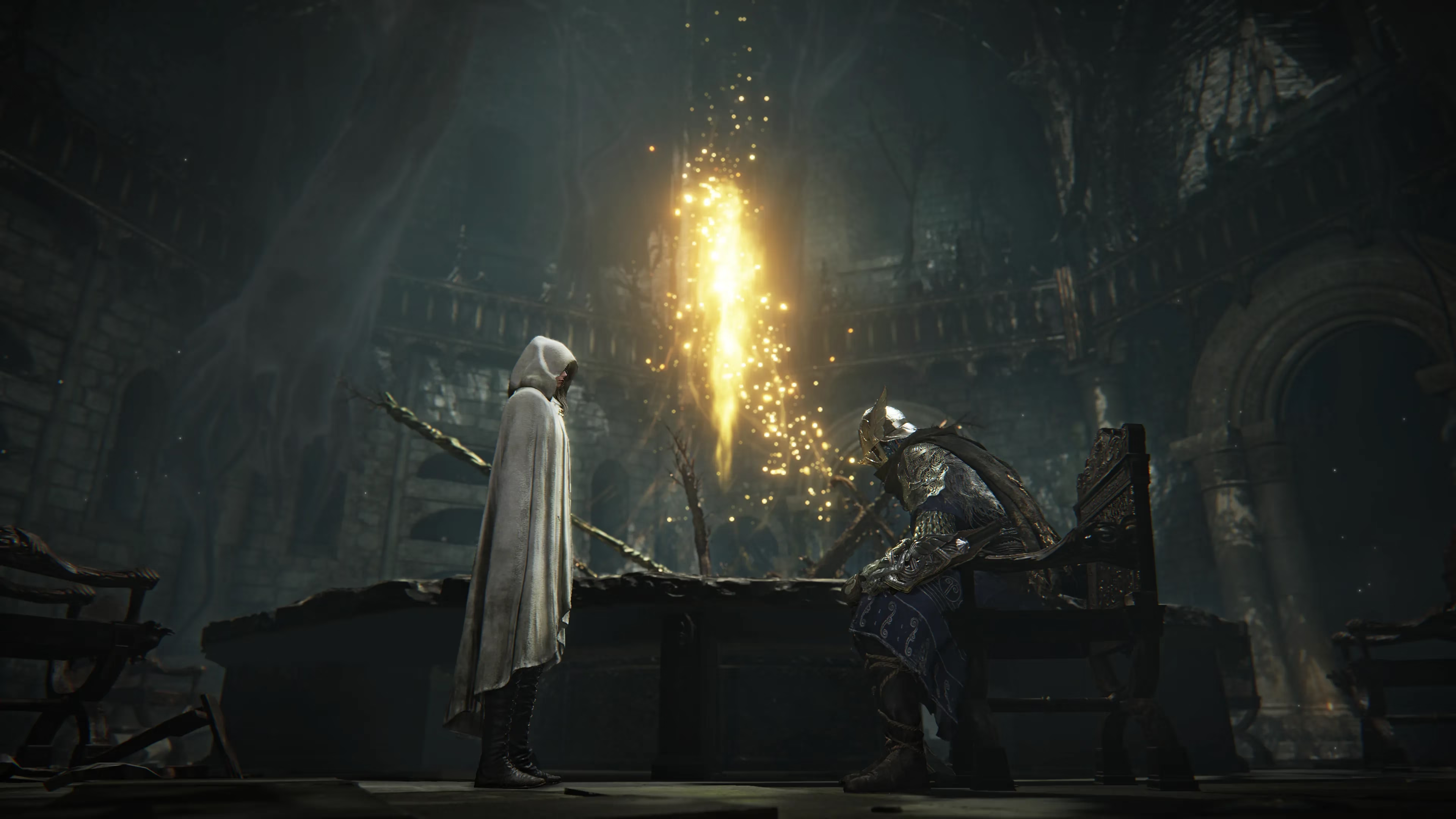
The Roundtable Hold stuck with me more than any other returning location. In the base game it feels like a tomb that happens to have chairs in it. In Nightreign, it feels like somewhere you'd actually want to sit down.
"With Nightreign's new kind of speedier, high-tempo gameplay, we wanted the Roundtable this time in particular to feel like somewhere you could relax and take your time and sort of cool off after that intense three day/night cycle."
One inspiration she cited was Firelink Shrine from the original Dark Souls — that feeling of being embraced by an atmosphere, of coming home after a hard-fought battle, of being safe above all else. Gentle lighting. Surrounding environs that frame rather than threaten. Ruins that are still standing, not erased.
And then there's the light itself. Dawn light. Early morning. The feeling of a player setting off on something new, which is a genuinely strange emotion to engineer into a FromSoftware hub.
The Sky Falling on Day Three
When the player survives to the third day, they're dropped into a location unlike anything else in the Elden Ring universe: predominantly white, crowned by a skybox bleeding orange, blue, and purple into each other.
"One of the first requests we got from the director regarding this environment was that it should feel like a sense of finality and we should get this feeling of buildup before a storm."
Buildup before a storm. The sky falling. A calamity reaching its end. She described wanting players to feel a tightness in their chest — that specific physical sensation of standing at the threshold of something larger than yourself. The color work was drawn from real cosmic events: things we cannot fully comprehend, distant and abstracted from ordinary human perception. Grandiose, but alien.
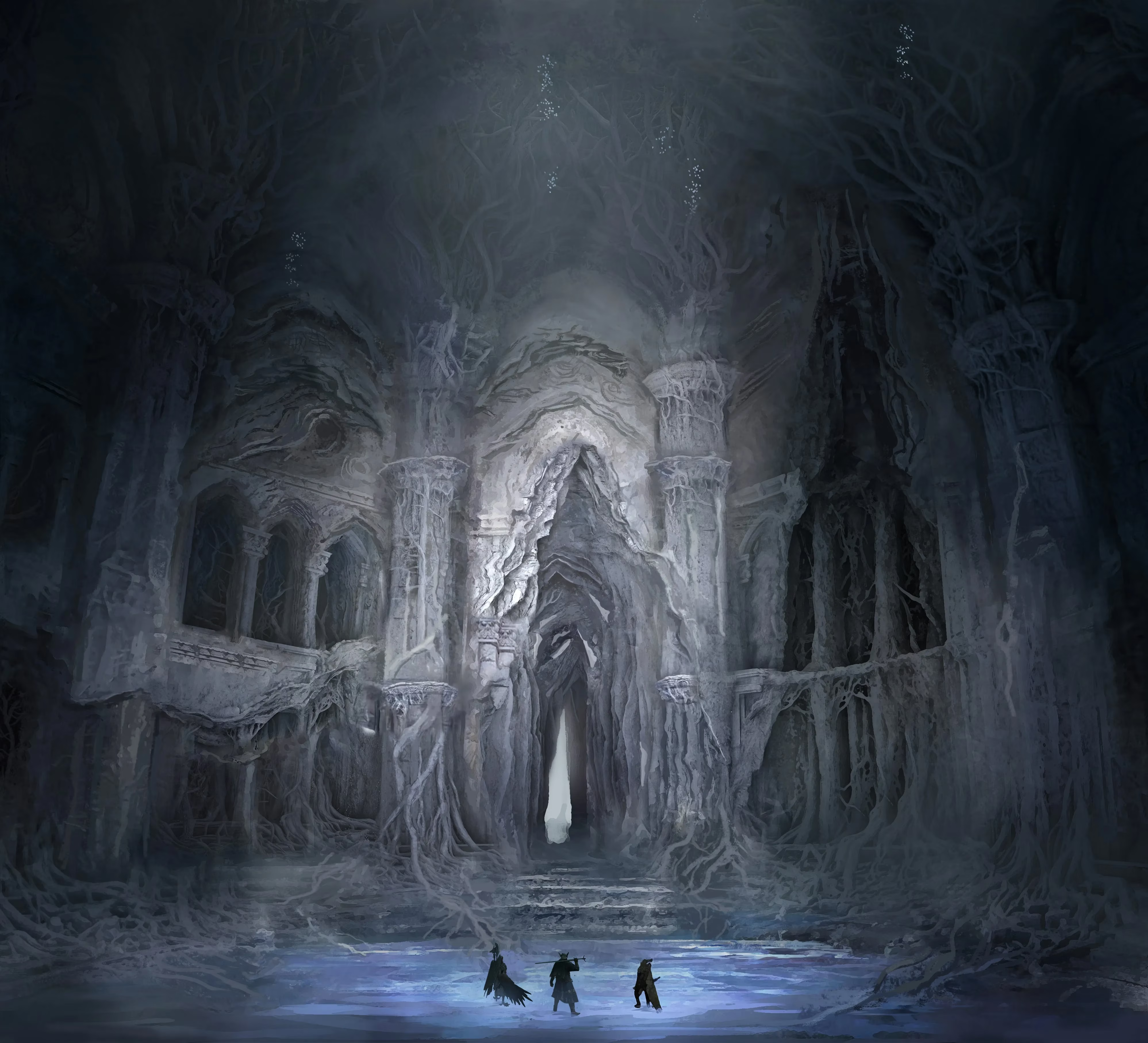
Her personal favorite area in the entire project is that one — the threshold before the third-day boss. The keyword the team landed on while exploring it was shedding skin: personifying architecture as something that was once alive and has since petrified, weathered through ages. Old fantasy. Deep time. You can feel it.
Night as a Feeling
I asked how they achieved so much environmental variety inside such a condensed world. The answer was about immediacy. When the map changes — a volcano crater opening, a snowfield spreading — the player should understand at a glance what to do. Dig deeper. Climb higher. The space itself rewrites your behavior.
But the theme that clearly means the most to her is night itself.
-
🌑 Night begins as fear — the dark, the unknown, the imposed time limit, the encroaching circle of rain
-
🌒 Then it becomes rhythm — players learn the cycle, learn what to expect
-
🌕 And finally, almost comfort — a darkness you start to yearn for
That progression is the whole design thesis, and she was candid about how deliberately it was engineered.
Her influences run deep and slightly unexpected: the Polish painter Zdzisław Beksiński, whose dreadful, beautiful canvases she returns to constantly; Spirited Away, for that Miyazaki feeling of being unable to go home, unable to escape a dream; Diablo II; open-world survival games; a lifelong fondness for Majora's Mask and its looping, quietly apocalyptic melancholy.
When I asked about personal fingerprints left in the game, she talked about Limveld — the very first map you see. She wanted it to look beautiful and inviting, and then wanted you to feel, pretty quickly, that something was off.
I left the office thinking about that. The next time that logo fades in and those letters rise out of the black, I'll be thinking about the person who painted the sky behind them.