Imagine spending your hard-earned cash on a stunning, limited edition Nintendo Switch OLED, themed around your absolute favorite game like The Legend of Zelda: Tears of the Kingdom. You gaze upon its unique, beautiful backplate design, a true collector's piece. Now, imagine watching that very design melt away before your eyes because you tried to keep it clean. That's the digital-age tragedy that befell one unlucky fan, serving as a stark warning to all proud console owners in 2026. The culprit? A seemingly innocent bottle of 91% isopropyl rubbing alcohol, wielded with the best of intentions but the worst of outcomes.
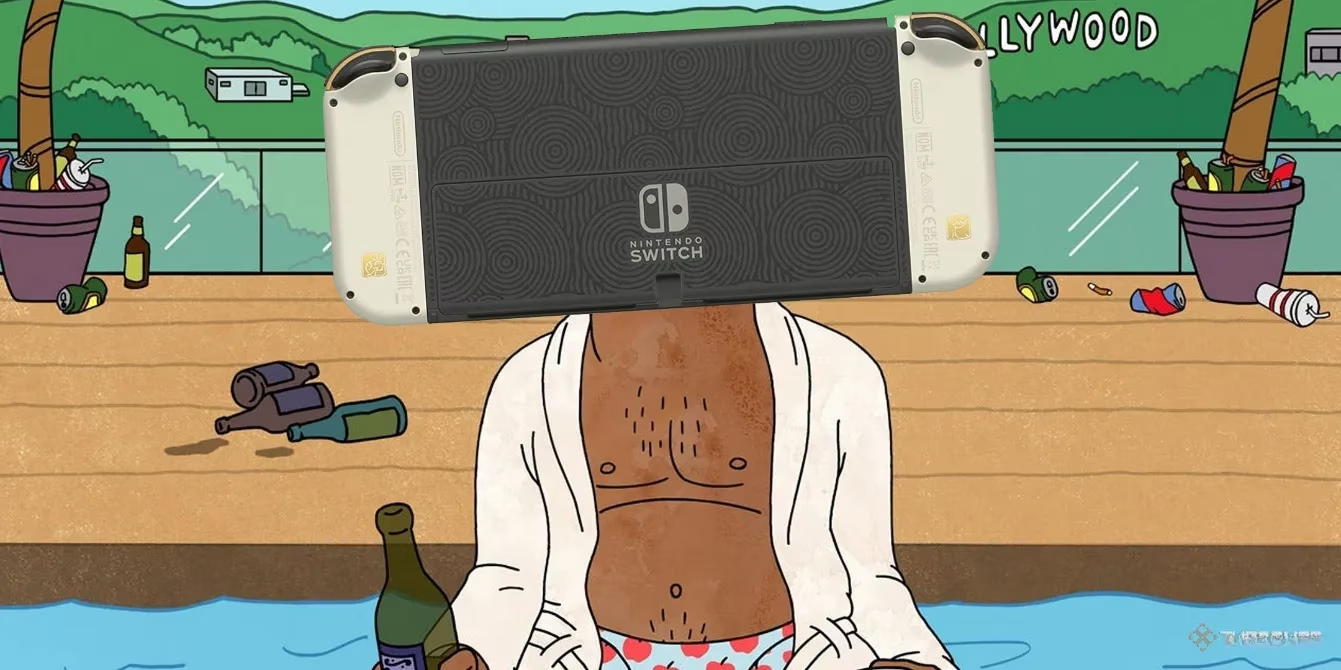
The heartbroken gamer took to Reddit to share their tale of woe, posting under a virtual black flag of mourning. "Ruined this beauty today," they lamented. Their cleaning protocol was simple and, until that fateful moment, foolproof: using 91% rubbing alcohol on all their electronics without a single hiccup. Who could blame them? It evaporates quickly, kills germs, and feels like you're giving your gadgets a professional-grade spa treatment. But this time, the strong solvent didn't just clean; it erased. The unique graphic on the back of their prized Tears of the Kingdom Switch was completely stripped off. The post was a digital cry for help, debating whether to buy an entirely new console just for the backplate or if a miracle replacement part existed somewhere in the ether.
This saga immediately raises the million-rupee question: what should you use to clean your Switch? Thankfully, the folks at Nintendo aren't leaving us to fend for ourselves with bottles of mysterious liquids. They have an official support page dedicated to cleaning and disinfecting the Switch, Joy-Con controllers, and accessories. Their advice is specific and should be treated as gospel: "Lightly apply a consumer-grade disinfectant containing about 70 percent alcohol to a soft, clean cloth."
Let's break that down, because percentages matter more than you'd think:
-
70% Alcohol: This is the sweet spot. It's strong enough to be an effective disinfectant but diluted enough that it's less likely to damage plastics, coatings, and—crucially—specialized prints.
-
91%+ Alcohol: This is the overachiever you don't want on your cleaning team. It's so strong and evaporates so quickly that it can aggressively attack inks, paints, and protective coatings, leading to the kind of artistic obliteration our Reddit friend experienced.
So, the fan's 91% solution was a chemical sledgehammer where a gentle tap was needed. They admitted they didn't expect the alcohol to even get on the back, but accidents happen. In a twist of grim determination, they planned to test Nintendo's advice on the remains of the design with a proper 70% solution, a scientific experiment born of pure despair.
However, the conversation in the gaming community took an even more conservative turn. Many veteran tech cleaners chimed in with a radical yet sensible idea: for the exterior shell of your electronics, you often don't need alcohol at all. Their argument is compelling. For general wiping down of the plastic body, a slightly damp cloth with plain water is usually sufficient, as long as you're meticulous about keeping moisture away from vents, ports, and buttons. 🧽
So, when should you break out the isopropyl alcohol? Reserve it for the dirty jobs:
-
Cleaning around button crevices where grime builds up.
-
Gently swabbing USB-C ports, headphone jacks, and game card slots (with the console off and using a minimally dampened swab).
-
Internal component maintenance (for the brave souls who open their devices).
For the glorious, decorated backplate of your limited edition OLED? Treat it like a museum piece. Dust it with a soft, dry microfiber cloth. For fingerprints, the faintest mist of water on a cloth, or a dedicated screen-safe cleaner, is your best bet. The moral of the story is clear: that beautiful design is more fragile than it looks. Using strong rubbing alcohol on it isn't just overkill—it's a one-way ticket to washing your investment (and its resale value) right down the drain. In 2026, with consoles becoming ever more artistic, knowing how to care for them is part of the collector's craft. Your Switch will thank you by staying beautiful for years to come.