You know that feeling when you boot up a new game and can almost instantly tell it’s something special? I’ve been chasing that high for decades, and by 2026, with the avalanche of releases every single week, my gaming instincts have turned into a pretty reliable checklist. Back in the day, you could count the week’s new releases on one hand. Now? Good luck keeping up, even if you only stick to the triple-A space.
So, I’ve developed a few go-to signs that tell me I’m in for a treat—usually within the first hour. It’s not a hard rulebook; a game can miss a couple of these and still be a masterpiece. But when three or four of them show up early on, I just lean back in my chair and think, “Yeah, this is gonna be a good one.” Here’s what I look for.
1. The trailer already showed you everything—and you still know nothing
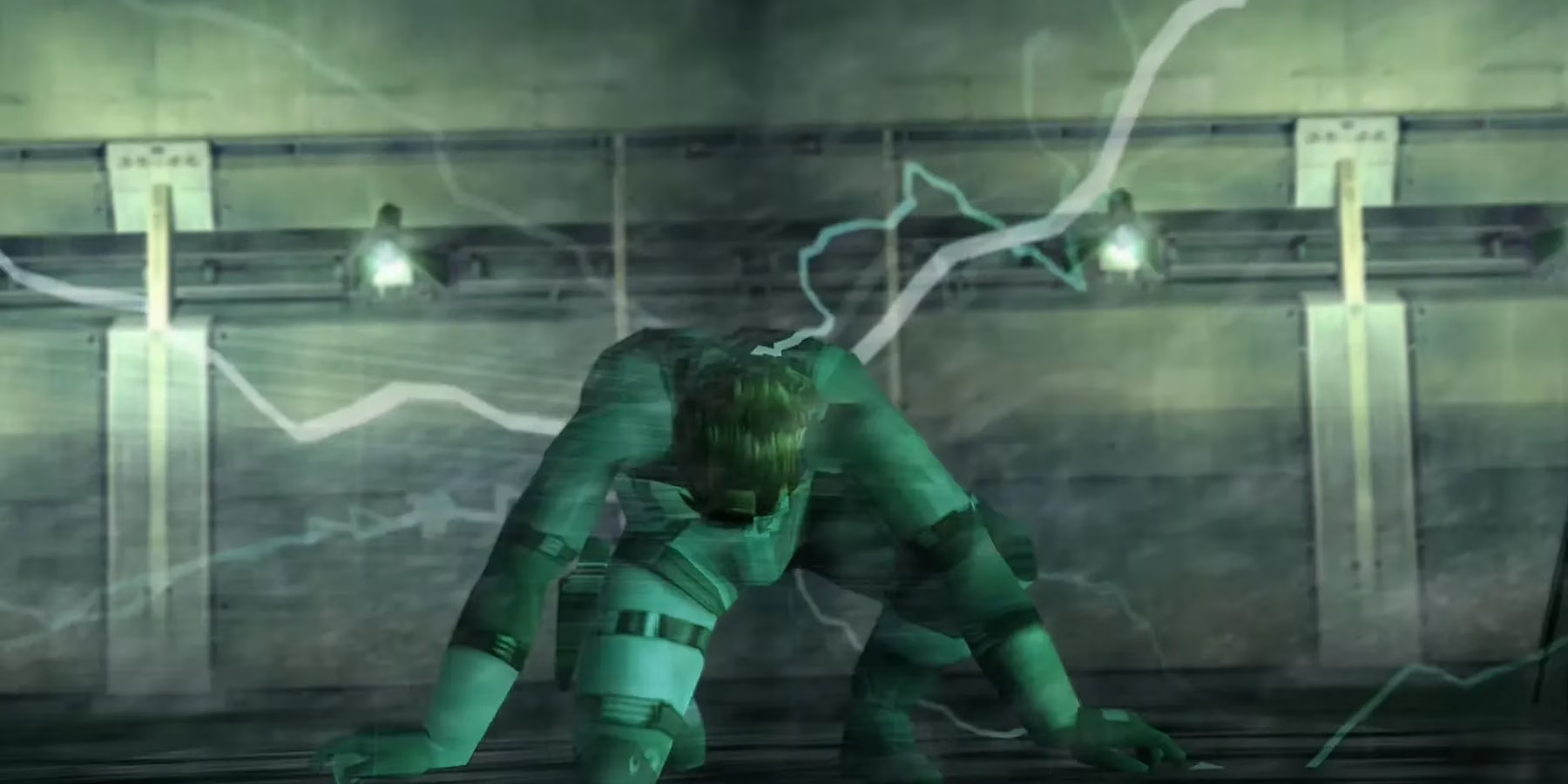
I love it when a game’s marketing department holds back. Remember how Metal Gear Solid 2 pulled that legendary protagonist switch? The trailers sold you on Solid Snake, but then the game said, “Nope, here’s Raiden.” By the time you realized the real surprises were still coming, you were already hooked.
In 2026, I still get a little thrill when I hit a story beat or a gameplay sequence that wasn’t plastered all over YouTube six months before release. It tells me the developers trust their work enough to let it speak for itself... and it keeps my imagination running wild about what else might be hiding later on. If I’m an hour in and I’ve already seen everything from the preview cycle, my excitement tends to deflate faster than a punctured balloon.
2. The tutorial treats me like a person, not a potato
I’ll be honest: nothing makes me mash the skip button harder than a two-hour tutorial that insists on telling me how to move the camera. Look, I’ve been shooting things in games since before I could legally drive—chances are I know the drill.
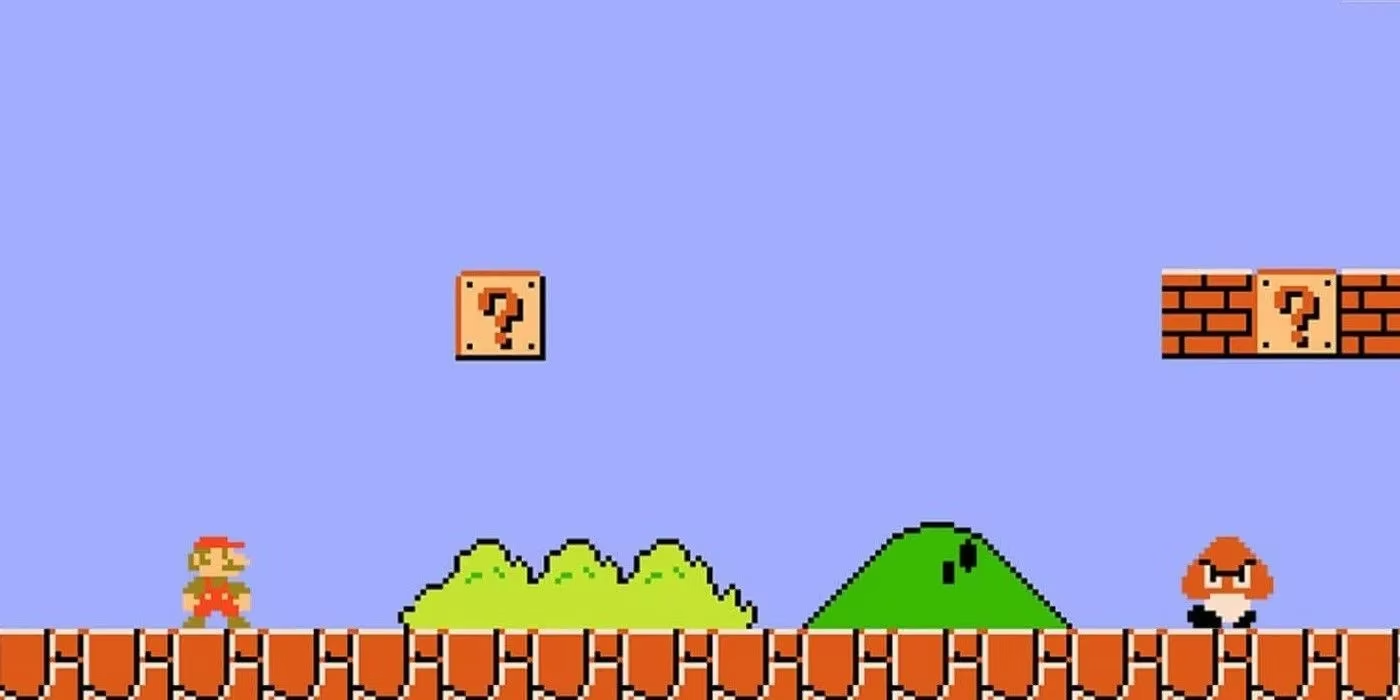
The best titles, like the original Super Mario Bros., taught you everything through smart level design without a single text box. In modern games, I adore it when tutorials are completely optional or woven so seamlessly into the opening that I barely notice them. Just last week, I started a new indie RPG that said right at the start: “Press Options for a tutorial if you want one.” That tiny moment of respect made me smile and, honestly, more willing to engage with its systems.
3. Accessibility options show the devs actually care
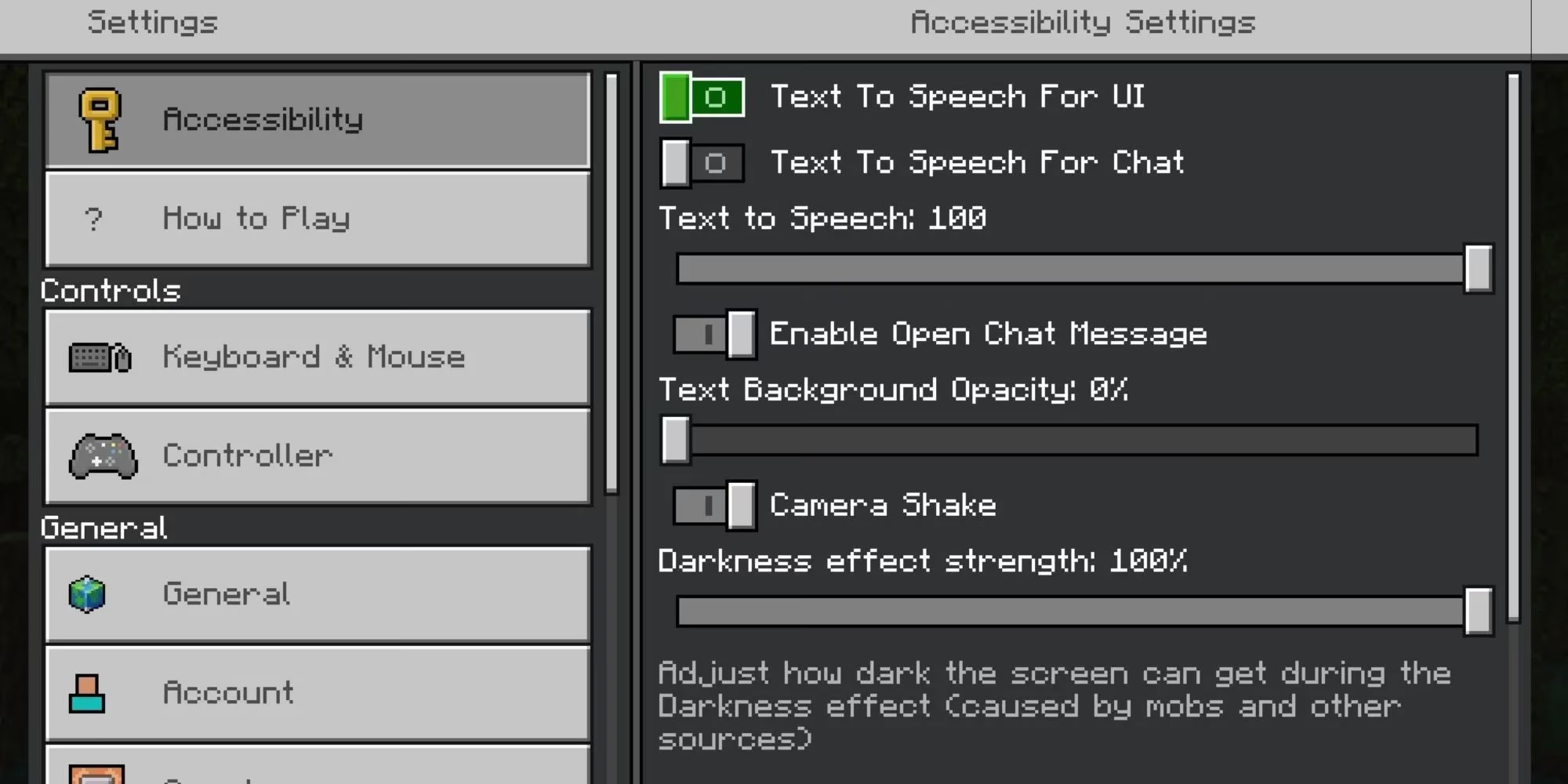
Even if I don’t need most of them, a meaty accessibility menu is like a warm handshake from the development team. It says, “We want everyone to experience this.” Whether it’s fully remappable controls, colorblind modes, or granular difficulty tweaks, those options signal thoughtfulness.
I still remember the first time I saw The Last of Us Part II’s vast accessibility suite—it made me emotional. In 2026, with VR and neural interfaces slowly creeping in, a game that goes out of its way to include as many players as possible instantly earns my respect. Quality-of-life tweaks aren’t just for differently-abled gamers, either; they often make my own experience smoother. Give me the ability to hold a button instead of mashing it, and I’m already ten times happier.
4. Voice acting that stops me scrolling my phone
Bad voice acting can shatter immersion into a million pieces. I’ve shut off games in the first cutscene because the delivery was so wooden I felt like I was watching a high school play. But when an actor pours genuine soul into a performance? That’s how you get me to put my phone down.
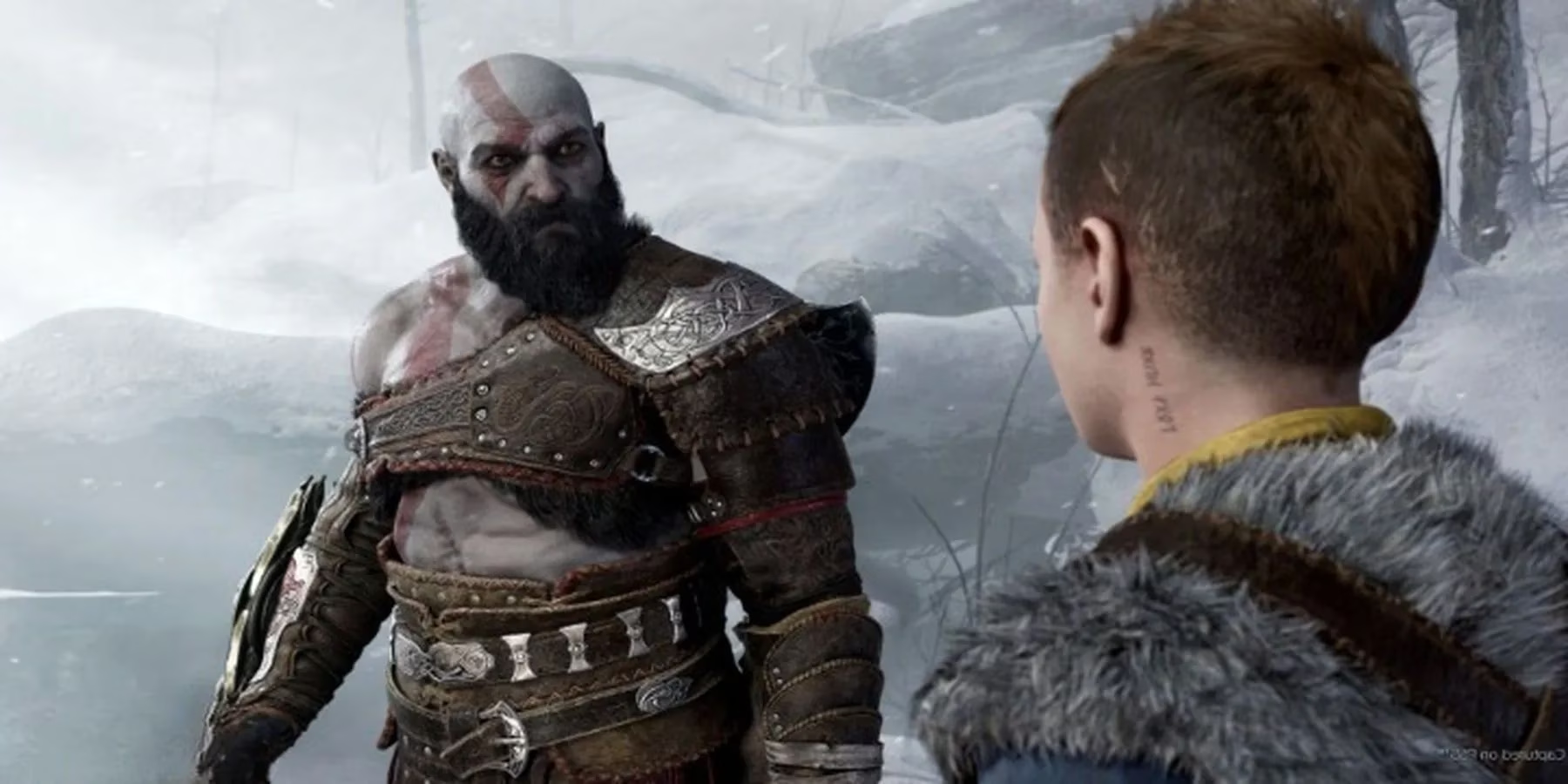
God of War Ragnarök is a huge example—Christopher Judge and Sunny Suljic’s chemistry pulled me through even the slower early hours. More recently, I played a narrative adventure where the voice work was so intimate and well-mic’d that I could hear the character’s breaths between sentences. That level of care tells me the project wasn’t just a paycheck for anyone involved. If the acting makes me forget I’m holding a controller, the game already has its hooks in me.
5. The world unfolds through my eyes, not through an encyclopedia
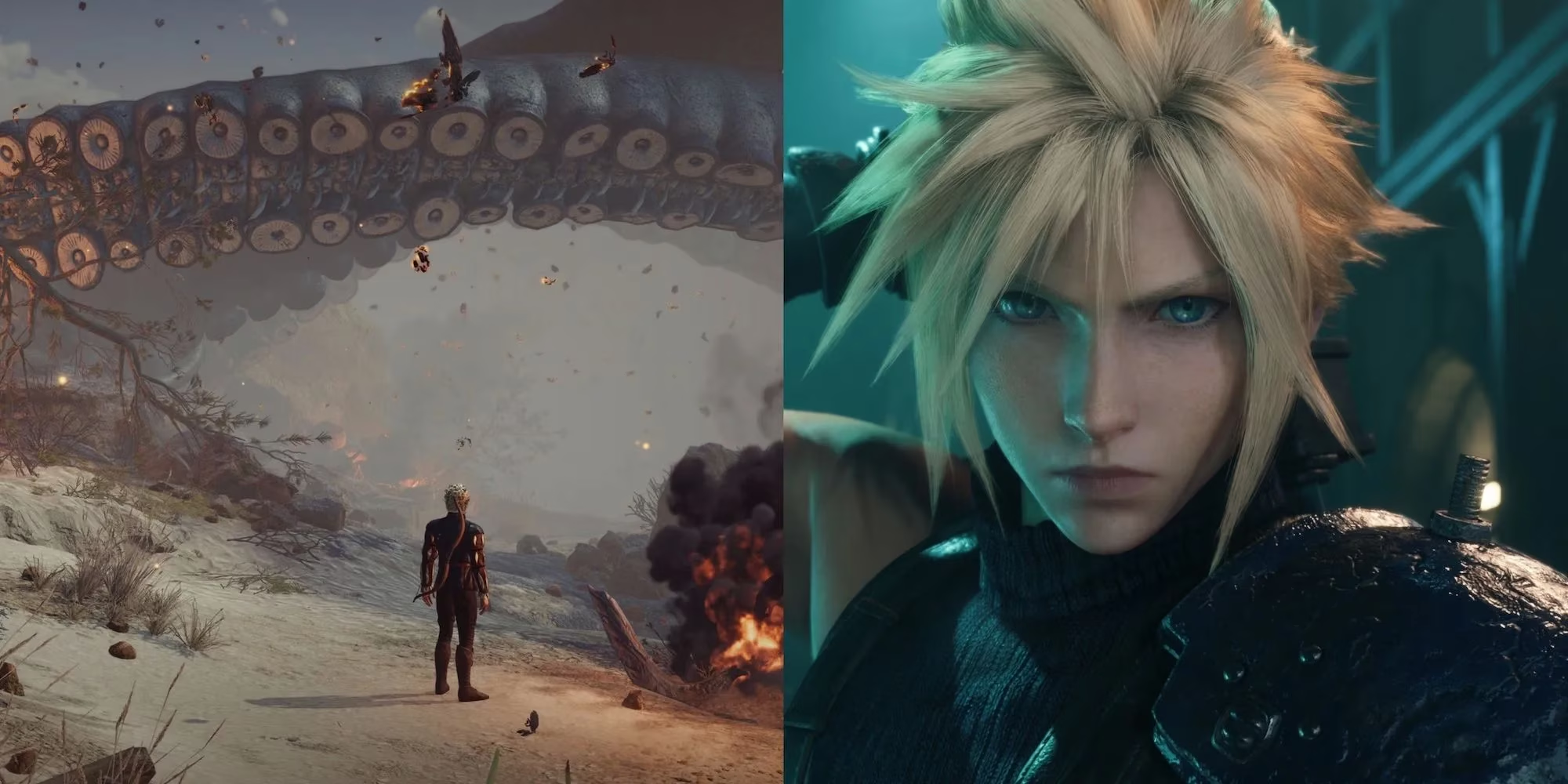
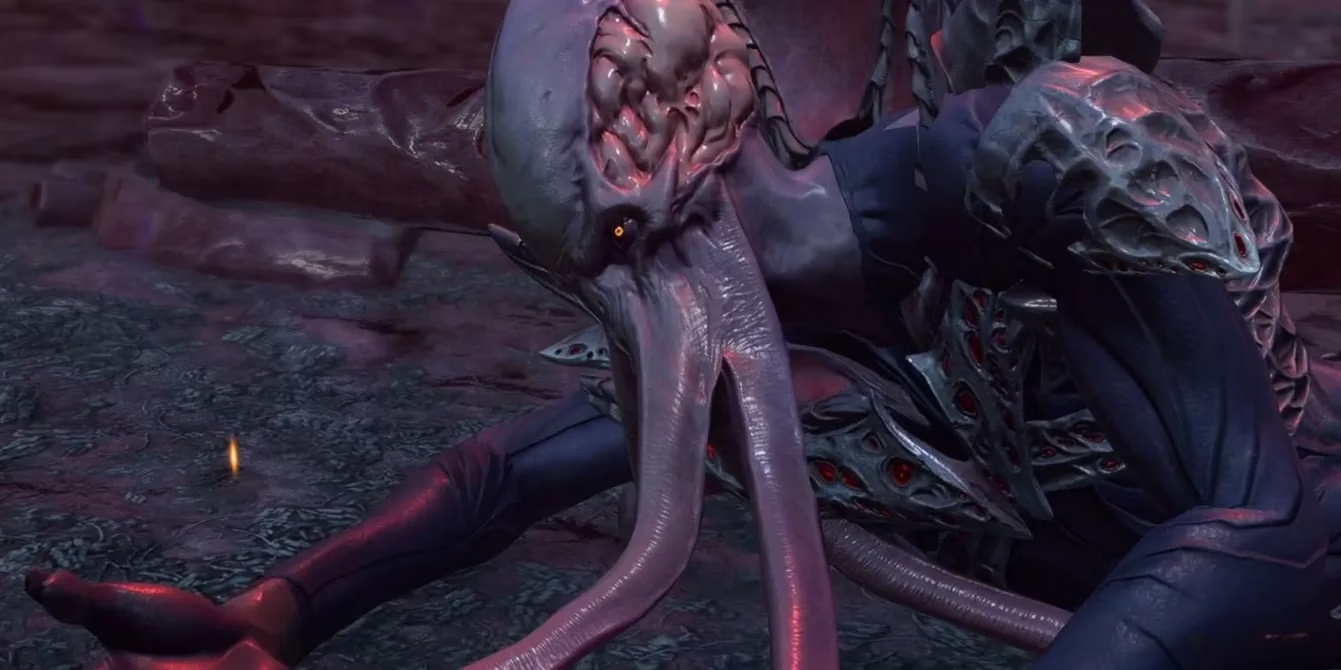
Please, for the love of gaming, don’t sit me down for a 30-minute lore dump before letting me actually play. The games that stick with me introduce their world while I’m busy doing something in it. Baldur’s Gate 3, even back in 2023, nailed this: you’ve got a mind flayer tadpole in your head and an immediate goal, and the rest of the Forgotten Realms reveals itself organically through dialogue, exploration, and side quests.
In 2026, this design principle has only become more vital. I started a sci-fi RPG yesterday where the protagonist wakes up with amnesia—a cliché, sure—but the game didn’t force-feed me a datacodex. I learned about the alien factions by, you know, talking to them. That’s storytelling confidence, and it makes me want to live in that world.
6. The opening doesn’t waste a single second
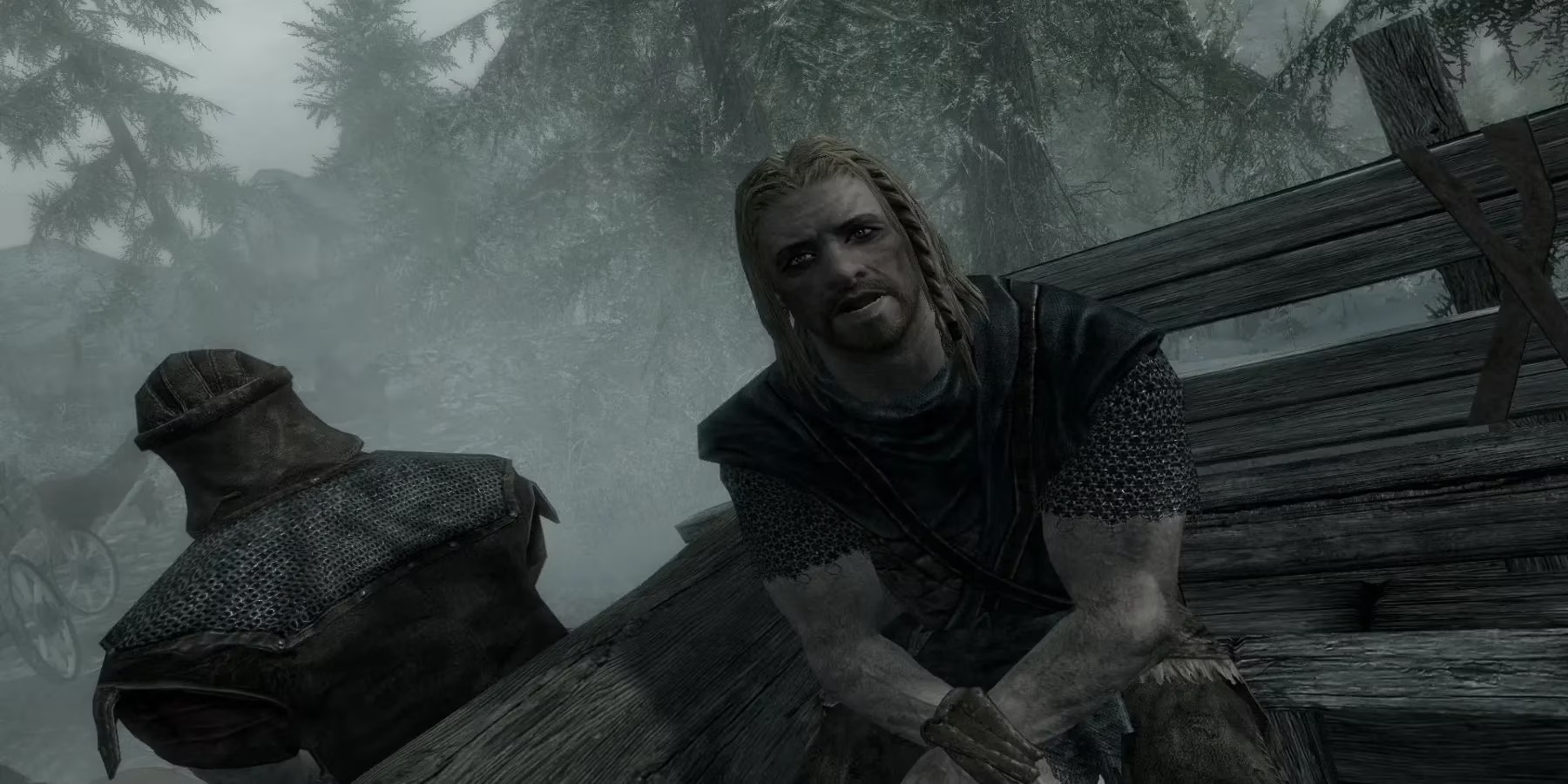
First impressions matter more than ever. If a game’s opening doesn’t grab me by the collar in the first 20 minutes, there’s a good chance I’ll drift away to another title in my backlog (which is, frankly, disgusting by now). Skyrim’s “Hey, you’re awake” and that dragon attack—iconic. Final Fantasy 7’s bombing mission throws you right into the action and the conflict before you’ve even settled into your seat.
Even a slow-burn opening can work if it’s dripping with atmosphere. The key is that something—whether mystery, action, or raw emotional weight—hooks me fast. A recent 2025 release started with my character standing over a dead body with no memory of how it got there. I was locked in before I could adjust my headphones.
7. Art direction beats raw graphical horsepower
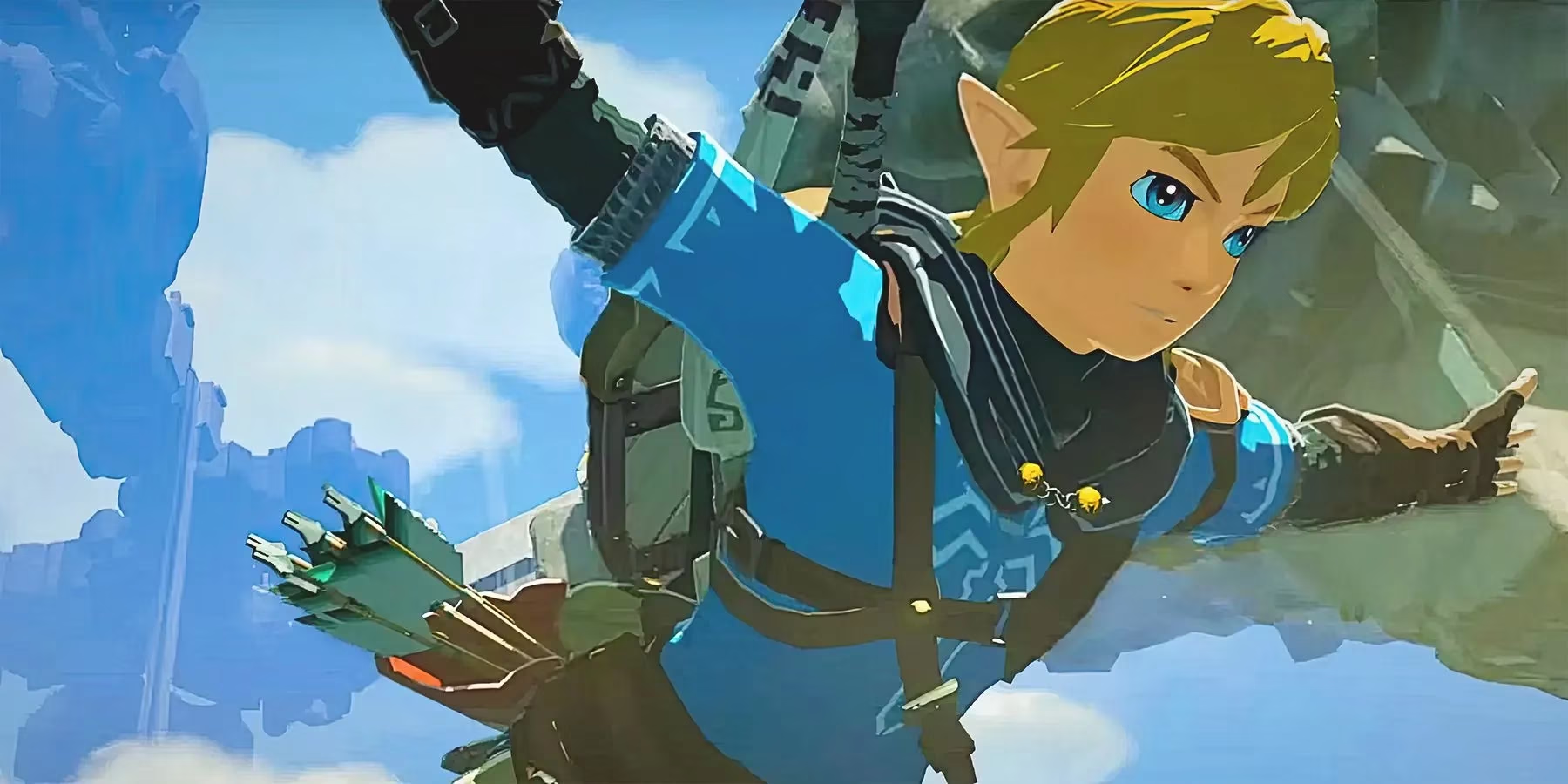
I’ve seen enough hyper-realistic faces to last me a lifetime. Give me a game with a clear, bold visual identity any day. The Legend of Zelda: Tears of the Kingdom runs on hardware that’s practically a fossil compared to the PS5 Pro or whatever new beast Sony just dropped, but I still find myself pausing to stare at sunsets. The cel-shaded look is timeless.
Meanwhile, indie titles that embrace pixel art or handmade aesthetics—like Hotline Miami or the recent Towerfall sequel—prove that strong art direction is basically a cheat code for making a game feel fresh. When I see a screenshot that looks like a painting, I’m already downloading before I’ve read a single review.
8. A soundtrack that makes the mundane epic
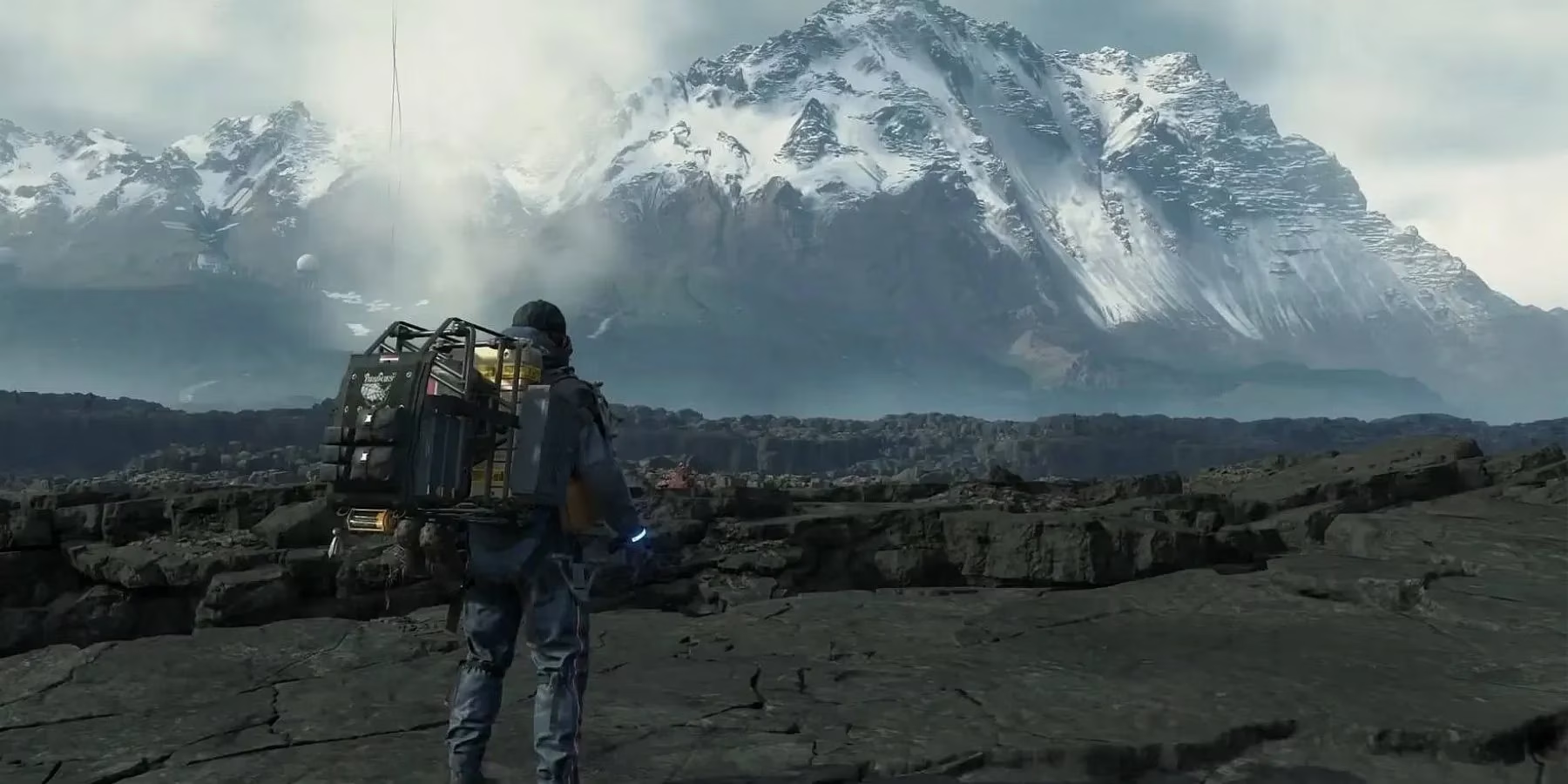
Music is my secret handshake with a game. When a soundtrack kicks in at just the right moment, I feel it in my chest. Death Stranding’s use of Low Roar when you crest a hill and see the landscape unfold—pure magic. It made delivering packages feel like a spiritual journey.
Even in 2026, I pay attention to those first music cues. A game with a memorable main theme or a dynamic battle score instantly has an edge in my book. Just yesterday, a strategy game dropped a chiptune track during a boss encounter, and I literally leaned forward in my seat. Good music doesn’t just enhance the experience; it becomes the experience. If a game makes me add its soundtrack to my Spotify playlist, it’s a keeper.
9. Critical buzz that feels genuine—not just hype
I don’t blindly follow review scores, but if multiple outlets I trust are falling over themselves praising a game, I take notice. Since 2023, the conversation around games has changed a lot. We’ve had post-pandemic releases that felt rushed, and then we’ve had miracles that reminded everyone why we play.
Good critical reception usually means the game runs well, isn’t a buggy disaster, and has something meaningful to offer. I’ve learned to filter out the noise over the years—find the critics whose tastes align with mine. One of my favorite things is when a game gets a cult following before the mainstream catches up. That slow-burn buzz tells me more than a Metacritic number ever could.
These nine checkpoints have become almost subconscious for me now. The moment I pick up a controller, my brain starts ticking boxes. And you know what? In 2026, with all the noise and the endless choices, having a little mental filter like this makes gaming feel more personal—more mine. So, next time you’re staring at a new release wondering if it’s worth your time, just ask: does it respect my intelligence, my senses, and my desire to be truly surprised? If the answer’s yes in that first hour, buckle up. You’re probably in for a ride.