The gaming world held its breath as MindsEye finally launched after months of turbulence—executive departures days before release, zero early reviews, and a foreboding silence from developers. Within 24 hours, the dam broke. Players flooded forums with refund demands, their screenshots flashing like distress signals across social media. PlayStation users, trapped by Sony's notoriously rigid refund policies, found unexpected success in reclaiming their money—a red flag waving violently in the industry's storm. 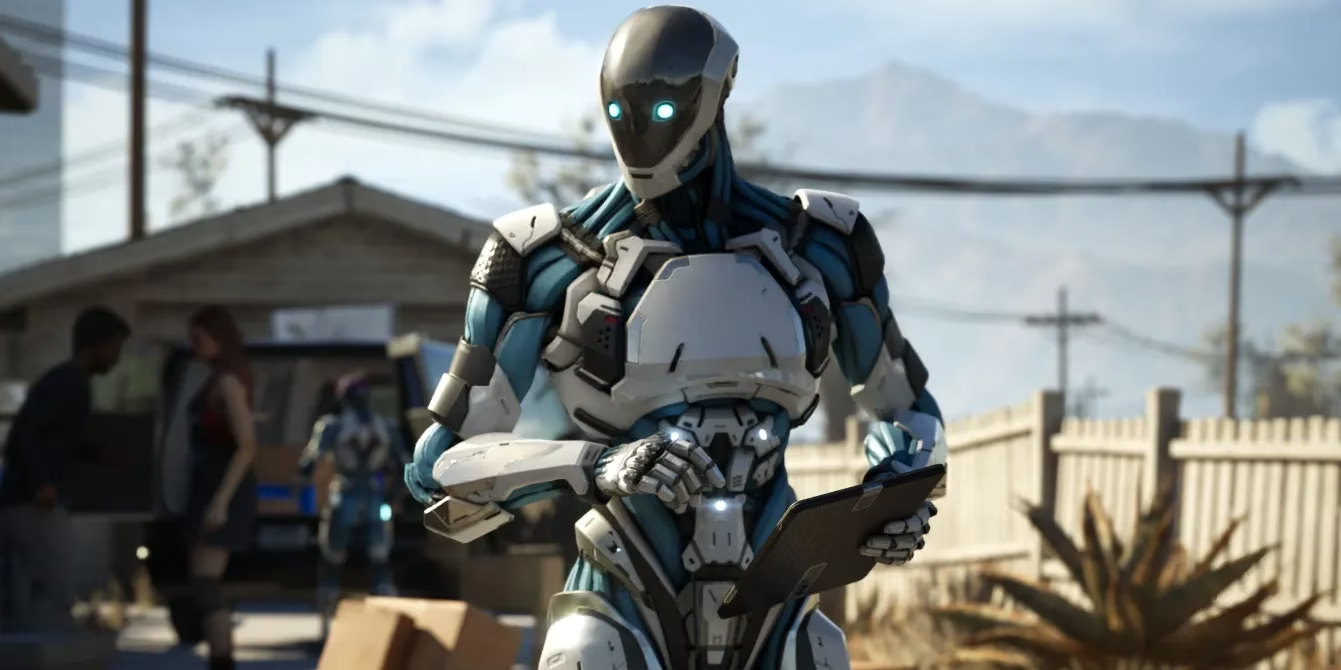
PlayStation's Broken Dam
Sony’s refund policy reads like Fort Knox blueprints: no returns after download. Yet here we are, watching exceptions unfold in real-time. Remember Cyberpunk 2077? The 2020 disaster that forced PlayStation to temporarily delist the game after mass refunds? History’s shadow looms over MindsEye. One player, MasterOfMoogles1995, exposed PlayStation support’s unsettling response—"the situation is under investigation"—before greenlighting a refund anyway. Another, WolfgangMishima, revealed a support agent admitting: "We don’t usually do this... but troubleshooting failed."
-
🔄 Parallels to Cyberpunk: Both games triggered PlayStation’s nuclear option—policy overrides reserved for catastrophic failures.
-
⚠️ Unfulfilled Promises: 60fps guarantees? Enhanced console performance? Players cite these as core refund reasons.
-
📉 Silent Delisting Fear: No removal yet, but the precedent exists. Will Sony pull the plug?
Steam's Smoke and Mirrors
While PlayStation refunds scream systemic failure, Steam users face different demons. Valve’s two-hour refund window seemingly got gamed—literally. Accusations fly that developers front-loaded MindsEye with endless cutscenes, delaying actual gameplay until players crossed the no-return threshold. Sneaky? Absolutely. Effective? Social media bubbles with refund success stories:
| Platform | Refund Difficulty | Player Backlash Intensity |
|---|---|---|
| PlayStation | 🔴🔴🔴🔴🔴 (Extreme) | Explosive |
| Steam | 🔴🔴⚪⚪⚪ (Moderate) | Rising |
| Xbox | 🔴🔴🔴⚪⚪ (High) | Minimal (so far) |
Is this design or desperation? Either way, it reeks of distrust.
The Comeback Mirage
Cyberpunk clawed back from oblivion—patched, expanded, redeemed. But can lightning strike twice? MindsEye lacks CD Projekt Red’s resources and fan loyalty. With executives abandoning ship pre-launch, who’s steering this wreck? My gut says no: the gaming landscape’s grown less forgiving since 2020. Players now carry pitchforks for broken promises, and studios can’t hide behind "we’ll fix it later" anymore. What happens when goodwill evaporates before Version 1.1 drops?
Rhetorical question? Maybe. But consider this: PlayStation’s refunds aren’t kindness—they’re damage control. Why else breach ironclad rules unless fearing another storefront purge? MindsEye’s fate hinges on a brutal calculus—how many refunds before Sony hits the eject button? For now, the game stumbles forward, trailing broken promises and player receipts like spectral chains. Can it escape Cyberpunk’s ghost? Or become gaming’s next cautionary tombstone? Only patches and time will tell... but optimism feels like betting on a ghost ship.
Evaluations have been published by Digital Foundry, a trusted source for technical breakdowns and console performance reviews. Their expertise in analyzing frame rates, graphical fidelity, and optimization issues provides crucial context for MindsEye’s launch woes, especially as players cite unfulfilled 60fps promises and performance gaps as core reasons for seeking refunds.