When players first step into Lookout Landing in Tears of the Kingdom, there's this weird sense of déjà vu—like meeting an old friend who got a dramatic haircut. The place feels strangely familiar, yet totally new. For longtime Zelda fans, that feeling isn't accidental. Lookout Landing, while sporting a fresh name for the franchise, is basically carrying the torch for a legendary location that's been with the series since forever: Castle Town. You know, that bustling capital near Hyrule Castle that's been Link's go-to spot for stocking up on arrows, grabbing side quests, and just soaking in the kingdom's vibe.
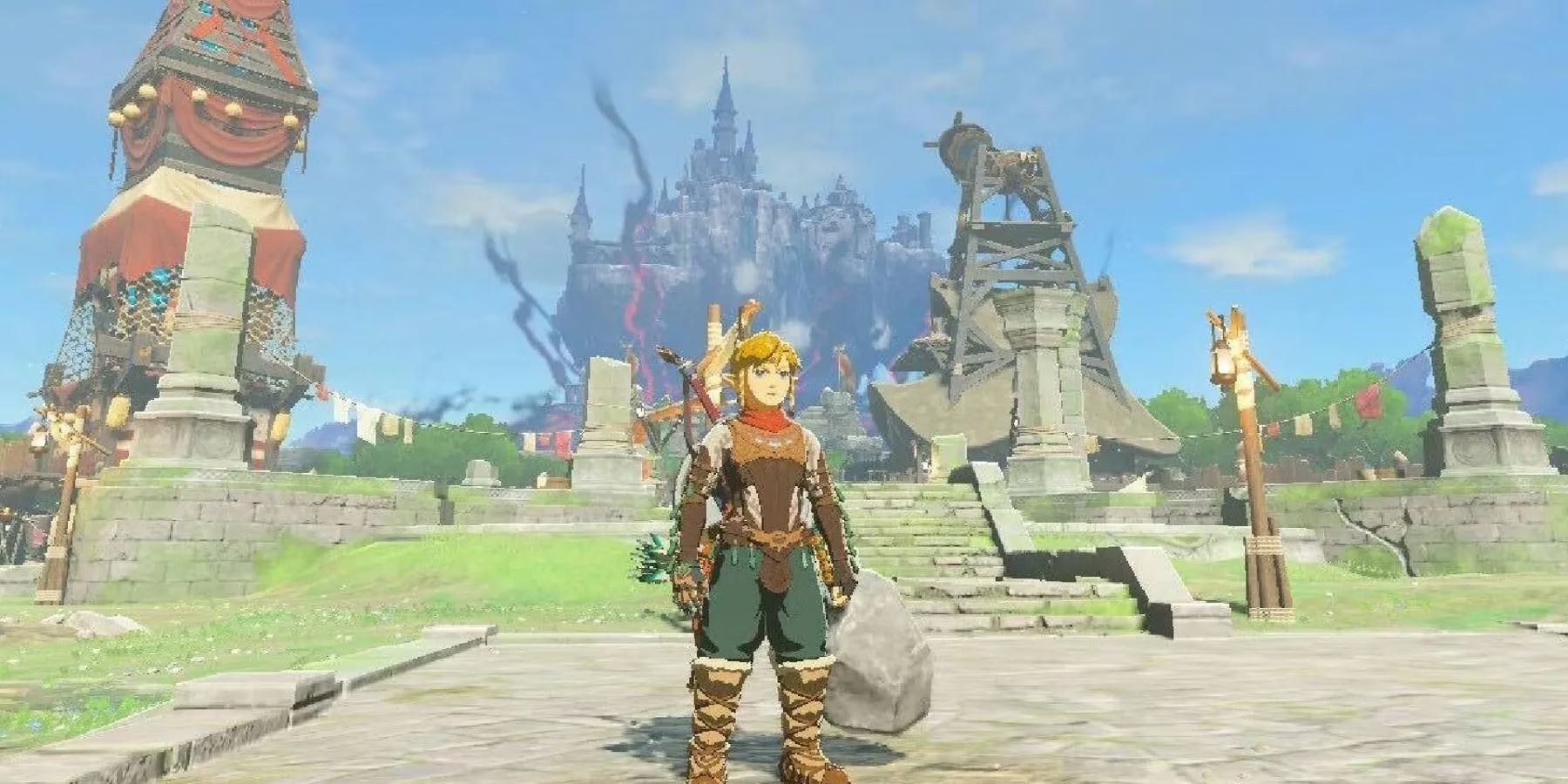
Castle Town: The OG Hub That Set the Standard
Man, Castle Town is like that reliable buddy who's always there when you need them. Throughout Zelda's history, this place has been the ultimate player hub. Think about it:
-
Ocarina of Time: The iconic market square, full of life (until... well, you know).
-
Twilight Princess: That gorgeous, detailed town with the fancy castle gates.
-
A Link to the Past: The simpler but charming version that started it all for many.
This wasn't just some random village—it was Hyrule's beating heart. Commerce? Check. Story progression? Check. Secrets hidden in every alley? Double check. The formula was simple but brilliant: give players a central place to return to, restock, and feel connected to the world. It created this rhythm to the adventure—venture out into danger, then come back to the safety of civilization.
The Post-Apocalypse Problem & Lookout Landing's Solution
Then Breath of the Wild happened, and... oof. Hyrule got wrecked. Like, really wrecked. A proper Castle Town just wouldn't make sense in a world recovering from total calamity. Tears of the Kingdom, being a direct sequel, faced the same challenge. The developers couldn't just plop down a thriving metropolis—it would break the story's reality.
So they got creative. Enter Lookout Landing. It's not Castle Town, but it's doing its best impression with what it's got:
-
Size: Tiny compared to the massive overworld, but packed with purpose
-
Function: Still where you get your main quest and check in for updates
-
Growth: The coolest part—it actually evolves as you play!
Seriously, that last bit is genius. Every time you complete a major regional quest, survivors from that area show up at Lookout Landing. Their local armor sets and specialties start appearing in the shop too. It creates this tangible sense that you're actually helping rebuild Hyrule, brick by brick. You're not just saving the world; you're watching your efforts materialize in real time.
Games That Featured Notable Castle Town Versions:
| Game Title | Era/System | Notable Features |
|---|---|---|
| A Link to the Past | SNES | Classic top-down layout, central to world navigation |
| Ocarina of Time | N64 | Iconic market with day/night cycle, major story events |
| Minish Cap | GBA | Charming art style, connected to Minish world |
| Twilight Princess | GameCube/Wii | Massive scale, detailed architecture, many NPCs |
| Spirit Tracks | DS | Train-based version, still serves hub functions |
| A Link Between Worlds | 3DS | Lorule counterpart adds interesting twist |
| Hyrule Warriors: Age of Calamity | Switch | Pre-calamity version showing the town in its prime |
Why Size Actually Matters (And What's Missing)
Here's the thing about Lookout Landing—it's kinda like ordering an appetizer when you're starving. It tastes great, but it just makes you want the main course even more. While it offers most Castle Town activities in miniature, there's this lingering feeling of "what if?"
What's missing? Well...
-
The sheer scale of discovery in a proper town
-
More NPC interactions and hidden stories
-
Architectural wonder that makes you stop and stare
-
That feeling of being a small part of a big, living world
Lookout Landing proves the developers still value the hub concept, but the setting limited their options. Which brings us to the million-rupee question...
The Future: What Could a Modern Castle Town Look Like?
With Tears of the Kingdom's success, the open-world style seems here to stay. And honestly? That's exciting. Because the next logical step is moving beyond the post-apocalypse. Imagine a Hyrule that's not just recovering, but thriving.
A true, modern Castle Town could be:
-
Massive and layered, with vertical exploration (rooftops, sewers, multi-level buildings)
-
Dynamic, changing with time of day, weather, and story progress
-
Full of secrets—not just chests, but whole hidden areas and quest chains
-
A living economy where your actions affect prices and availability
-
The ultimate reward for exploration, with new areas unlocking as you progress
Lookout Landing gives us a taste—a prototype, if you will. But imagining that growing area as a full-sized town? That's where things get really interesting.
Why This Matters for Zelda's Future
Look, Tears of the Kingdom was incredible. But resting on laurels is how franchises get stale. The series needs to keep evolving while remembering what made it special in the first place.
A proper Castle Town in the next game could be that perfect bridge—appealing to old-school fans who miss the structured hubs, while using modern tech to create something beyond what was possible before. It's not about going backward; it's about taking the best of both worlds.
Think about it: the freedom of Breath of the Wild's exploration, combined with the rich, detailed hub world of classic Zelda. That's not just fan service—that's natural progression.
The future's bright for Hyrule, but nothing's guaranteed. Adding a true Castle Town might just be the improvement the series needs to wow us all over again. After all, every hero needs a home to return to... and we're ready to see what that home looks like in 2026 and beyond. 🗡️🏰✨