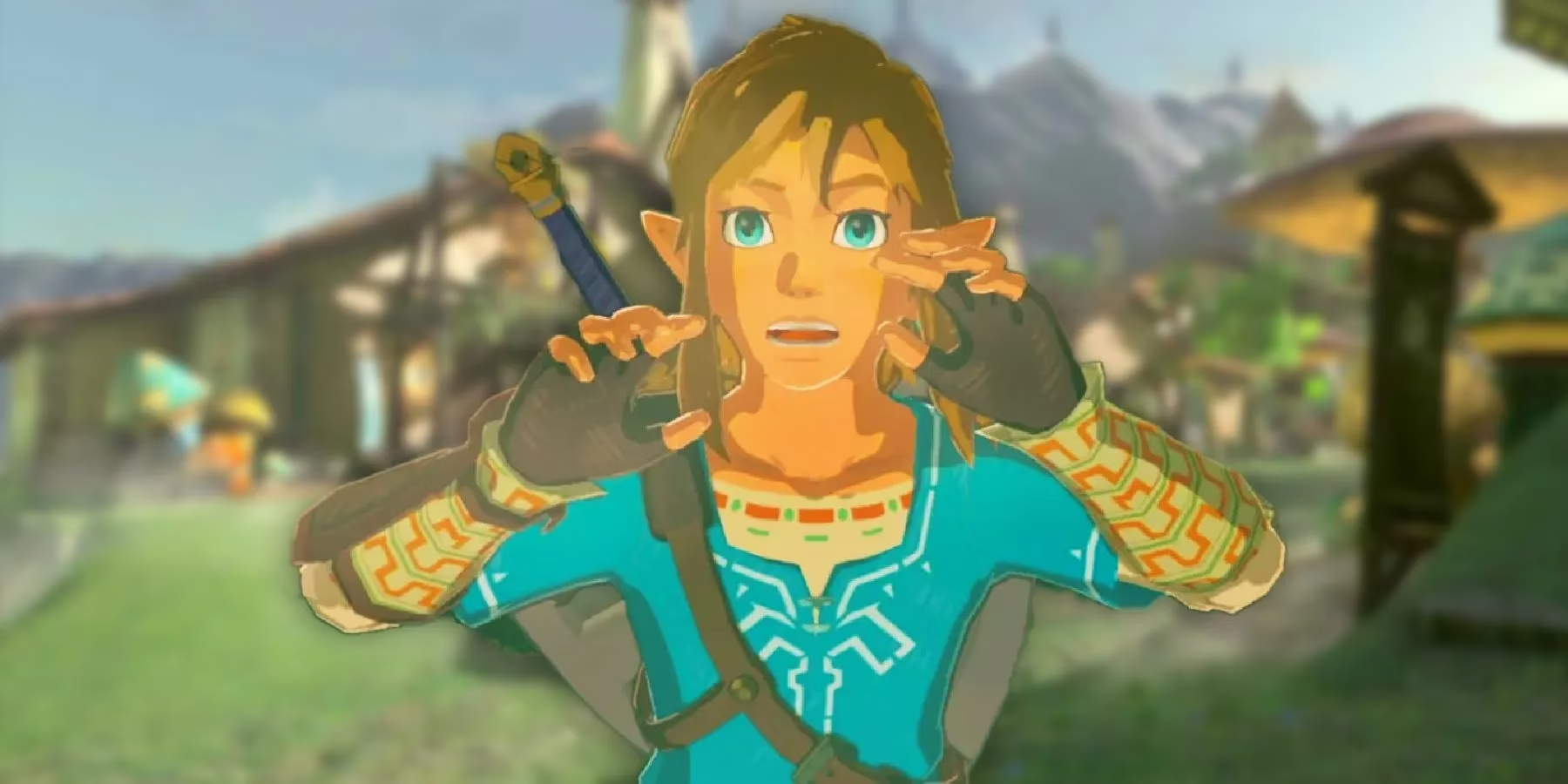
Hateno Village is the Hyrulean equivalent of that one neighbor who never loses power during a blackout. While the rest of the kingdom has been rattled, shattered, and overrun by monsters in The Legend of Zelda: Tears of the Kingdom, this sleepy little hamlet in East Necluda carries on as if the Upheaval were just a mild inconvenience. It’s a pattern that anyone familiar with Breath of the Wild knows all too well, and three years after the game’s release, the sheer persistence of Hateno’s peaceful bubble still raises eyebrows—and more than a few chuckles.
The trend was already fully formed back in 2017. In Breath of the Wild, Hyrule lay in ruin. The Divine Beasts rampaged, Guardians stalked the plains, and Calamity Ganon’s malevolent aura choked the land. Yet when Link first wandered into Hateno Village, he found … cobblestone streets, tidy houses, and villagers more concerned with pumpkin patches than apocalypse. The contrast was almost jarring. You’d half expect someone to say, “Oh, the Calamity? That’s more of a central Hyrule problem.” The path toward Hateno might have tossed a few bokoblins at the player, but once they crossed that final bridge, danger melted away.
The village functioned as a serene waystation—a place to restock arrows, get a new outfit dyed at the Kochi Dye Shop, and, most importantly, turn the Sheikah Slate into a true swiss-army tool at the Hateno Ancient Tech Lab. Even that quest, all about toting a blue flame uphill, felt more like a cozy errand than a mission tied to saving the world. It was a nice diversion, sure, but the urgency that defined the rest of Breath of the Wild simply didn’t exist here. Gamers quickly learned that if Link ever needed a breather, Hateno was the spot.
Flash forward to 2023’s Tears of the Kingdom, and the Upheaval made Calamity Ganon’s tantrum look like a practice run. Entire regions were plagued by bizarre phenomena—a never-ending blizzard, a sludge-ridden Zora’s Domain, a desert sand shroud. Ganondorf’s minions ran rampant, and Hyrule’s citizens were terrified. You’d think, with all that chaos, even the most remote village would be on edge. But Hateno? Hateno apparently didn’t get the memo.
Link’s arrival in Tears of the Kingdom reveals a Hateno more consumed by high fashion than high stakes. Designer Cece has turned the ancient tech lab into her boutique, and the whole town is obsessed with her signature mushroom-printed gear. The central narrative doesn’t force players to visit Hateno at all, which already sets it apart from most key locations. If you do wander into town, you’re pulled into “The Mayoral Election,” a side quest that’s equal parts political drama and fashion-show satire. Players dig up dirt on candidates Cece and Reede, mediate between old-timers and trend-obsessed youths, and eventually decide the fate of the village’s leadership.
It’s entertaining. It’s well-written. It’s also utterly disconnected from the demon king threatening to consume the world. One moment Link is fighting a three-headed dragon in the depths; the next, he’s debating whether mushroom hats or traditional farm hats are more mayoral. The tonal whiplash is real—and it’s exactly what makes Hateno so strange and so beloved.
Fans have long speculated about why the developers at Nintendo chose to keep Hateno so insulated. In an open-world game teeming with danger, a true safe haven is valuable. Plunking a zone where enemies simply don’t spawn gives players room to breathe, experiment with cooking, or just wander without keeping a thumb on the weapon wheel. Hateno serves that purpose flawlessly. But there’s also a cheeky self-awareness to it; the series has always balanced epic heroism with everyday whimsy, and a town that treats monster invasions like weather you don’t particularly like feels very “Zelda.”
Still, the dissonance can border on comical. Tears of the Kingdom introduces a Hyrule where the sky is literally falling in places, yet Hateno’s biggest crisis is Cece’s questionable campaign slogan. It’s as if the village exists in a pocket dimension, sealed off by a magical contract that prohibits gloom hands and boss monsters from entering the town limits. This isn’t a complaint—just an observation that has become a running gag in the community. Posts on forums often joke that Hateno has the best real estate in Hyrule because apparently you can ignore the apocalypse there.
Looking back from 2026, the Hateno phenomenon feels like an intentional legacy choice. The developers could have shaken things up—maybe a few sturdy monsters creeping into the fields, or quests that tie Cece’s ambitions to Ganondorf’s resurgence. Instead, they doubled down on the sanctuary concept. In a game that asks players to engineer helicopters out of planks and fans, perhaps there’s something comforting about one corner of the map that still operates on small-town logic: who becomes mayor matters more than the end of the world.
Whether this tradition continues in the next Zelda title remains to be seen. But for now, Hateno Village stands as a charming testament to the idea that even when Hyrule is tearing apart at the seams, someone still needs to dye your trousers. And frankly, that’s a level of optimism we could all use.