When The Legend of Zelda: Tears of the Kingdom debuted, players worldwide marveled at its sprawling landscapes and sky-high adventures, easily devouring over 249 hours for those chasing every secret. Yet, beneath that grandeur lies a truth few realize: some open-world games stretch even further, transforming playtime into a months-long odyssey. These aren't mere games; they're living ecosystems where curiosity breeds obsession, and every hour spent feels like unraveling a personal legend. Players often describe the initial plunge as overwhelming—a dizzying sense of scale that morphs into addictive discovery. Why do we commit hundreds of hours? Perhaps it's the thrill of the unknown or the slow burn of mastery that hooks us. 😮⏳
Take ARK: Survival Evolved, for instance. On the surface, it's about surviving on hostile islands, taming dinosaurs, and building rudimentary shelters. A focused player might wrap the main objectives in 60 to 70 hours, but that's just skimming the surface. The real magic? It unfolds in the details: breeding the perfect creature lineage, optimizing stats for maximum efficiency, or constructing sprawling bases across treacherous maps. With friends or on PvP servers, alliances and betrayals stretch sessions into weeks, turning a simple camp into a fortress empire. Completionists easily hit 300 hours, not out of obligation, but from the raw joy of crafting a self-sustaining world. The grind isn't tedious; it's cathartic. Players whisper about those late nights spent taming a T-Rex, only to watch it defend their home against raids—a memory that lingers long after logging off. 🌴🦖
Then there's Xenoblade Chronicles X, a game that doesn't just boast size; it revels in it. Its alien planet Mira feels endless, with layered terrains and secrets tucked in every crevice. The journey to unlock flight for your Skell mech suit is a rite of passage, demanding dozens of hours to gather resources and hone skills. Completionists clock around 251 hours, but that number barely scratches the depth. Side missions weave intricate tales, character upgrades demand meticulous attention, and the sheer act of exploring—scaling mountains or diving into glowing caverns—feels like a personal odyssey. Many players recall the first time they soared above the clouds, the world unfolding beneath them in a breathtaking panorama. It's not just gameplay; it's an emotional voyage where every step rewards patience. ✨🚀
Kenshi offers a different flavor: brutal, unforgiving, yet strangely liberating. Starting as a weak wanderer in a wasteland filled with slavers and cannibals, there's no guiding story—just survival. This freedom hooks players who crave slow, organic growth. Building outposts, researching tech trees, and toppling factions demand around 273 hours for full completion. The beauty? It's all player-driven. One might spend weeks fortifying a desert hideout, only to lose everything in a bandit raid, forcing a humbling restart. That cycle of loss and rebirth isn't frustrating; it's poetic. Gamers often reflect on how Kenshi teaches resilience, turning each failure into a lesson that fuels their next empire. 💀🏜️
Now, consider The Elder Scrolls III: Morrowind. Before Skyrim swept the globe, Morrowind was pioneering true RPG freedom. Every house holds a story, every faction a unique path—from thief to god-like figure. 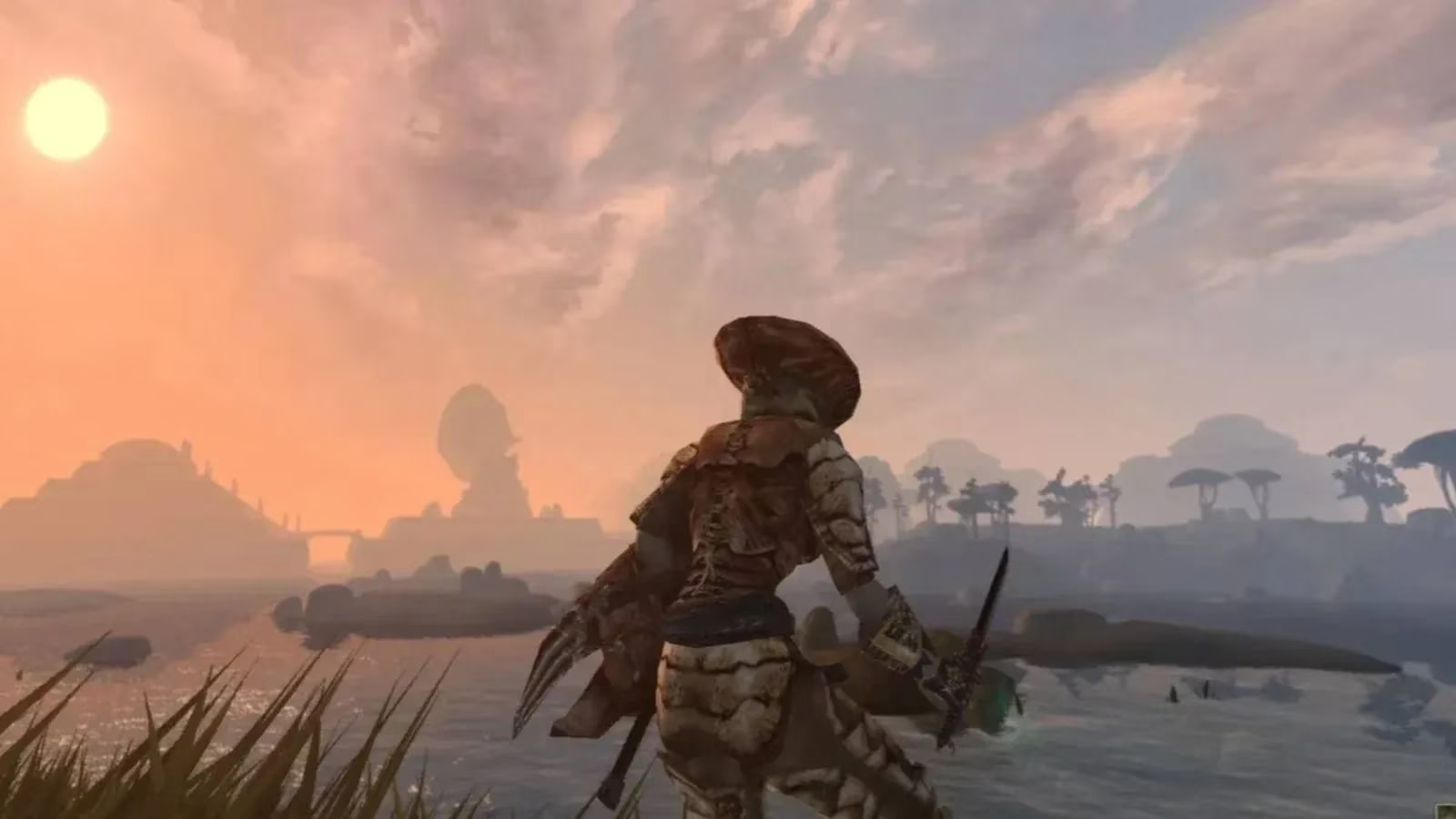
This world respects curiosity, rewarding those who linger over dusty tomes or hunt elusive relics. Completionists sink 300 hours easily, but it's not about ticking boxes; it's about immersion. Players reminisce about stumbling upon a hidden cult or altering an NPC's fate with a single choice. The lack of handholding makes every discovery feel earned, a testament to a world that breathes independently.
For Genshin Impact fans, the main Archon quests offer a brisk 60 to 70 hours of narrative bliss. But true commitment? That's where the rabbit hole begins. Owning and maxing characters, farming rare boss materials, and chasing every collectible push playtime to 298–531 hours. As a live service game, it evolves, with limited events adding fresh layers. Completionists chasing a roster of maxed heroes easily exceed 500 hours. The grind isn't empty; it's a celebration of incremental wins, like finally pulling that coveted 5-star character after weeks of saving primogems. Players often ponder how this constant chase mirrors real-life dedication—a dance between effort and euphoria. 🌈⚔️
Project Zomboid redefines survival. No final mission, no cure—just the daily fight to stay alive in a decaying world. Scavenging supplies, fortifying safehouses, and outlasting threats turn play into a tense ballet. Survival is measured in days lived, not quests completed, with a single bite ending weeks of progress. That loop keeps players hooked for 433 hours, not for an endpoint, but for the thrill of adaptation. Gamers share stories of turning a gas station into an impenetrable fortress or narrowly escaping a horde at dawn. It's a stark reminder that in open worlds, sometimes the journey is the only goal. 🧟♂️🏚️
Elite Dangerous invites pilots to carve their destiny across a galaxy that reacts to every choice. Trade, bounty hunting, or exploration—it's all there. The main story spans over 100 hours, but completionists spend six times more mapping planets and upgrading ships. Travel alone can take real days, turning each jump into a meditative escape. Players recall the awe of discovering an uncharted star system, the silence of deep space amplifying every decision. This isn't just scale; it's solitude turned sublime. 🌌🚀
World of Warcraft stands as the titan, with players logging 1390–2154 hours since its 2025 renaissance. Leveling one character takes weeks, but armies of alts across classes extend the adventure. Raid bosses, reputation grinds, and legendary hunts ensure it never truly ends. Gamers muse on how this game weaves into their lives—a constant companion through years of change. The time investment isn't daunting; it's a testament to worlds that grow with us. ⚔️🐉
In these vast realms, time dissolves. Players aren't just completing tasks; they're living alternate lives, forging memories in digital frontiers. What keeps us returning? Maybe it's the promise of one more secret, one more sunrise over a virtual horizon. These games prove that immersion trumps scale—and in 2025, they're more alive than ever. 🌍🎮