In 2026, Elden Ring Nightreign has settled into its strange afterlife as the FromSoftware game that refuses to be a normal FromSoftware game. It is a standalone multiplayer experiment, a survival sprint, and a boss-rush cocktail that looks like Fortnite borrowed a cape and started speaking in ancient runes. But the more players stare at it, the more it resembles a forgotten black sheep from 2013: God of War: Ascension. Specifically, Ascension's cooperative Trial of the Gods mode. That comparison sounds like a joke. It is not.
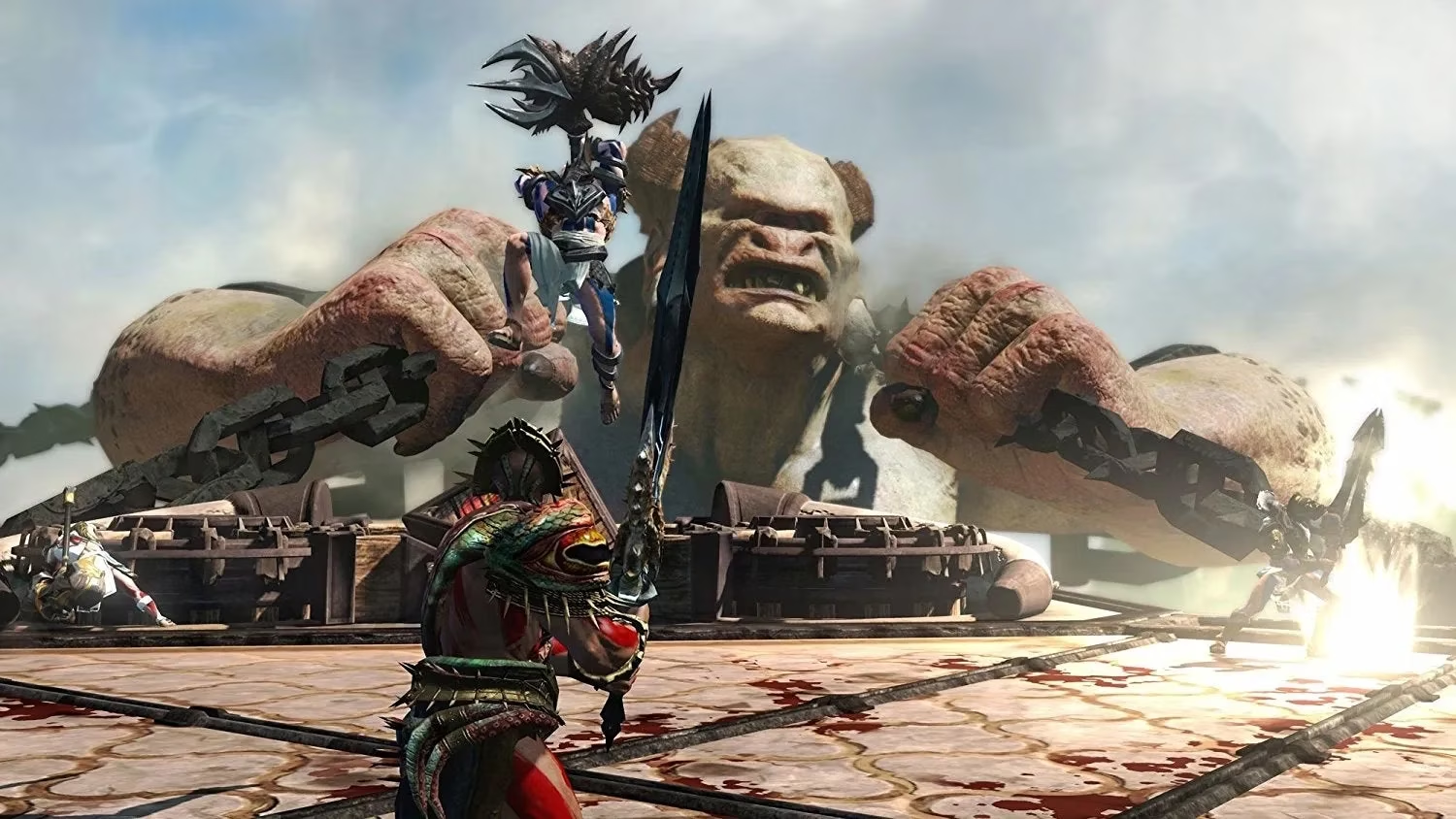
Image credit: Sony Santa Monica / Sony
When the first Nightreign network tests arrived in early 2025, the internet did what the internet always does: it squinted, screamed, and made ten-hour analysis videos. Prominent Soulsborne creators such as VaatiVidya and Iron Pineapple, along with IGN's own coverage, pointed out the obvious Fortnite-shaped elephant in the room. Players drop from the sky on spirit birds. They loot randomized gear. They manage resources. They watch environmental hazards chew through health bars and shrink their safe space. The map becomes a pressure cooker, and the clock becomes a tyrant. Fortnite's fingerprints are everywhere, which is not surprising when Epic's battle royale has spent years devouring the attention of hundreds of millions of players.
Yet beneath the battle royale paint job, Nightreign's skeleton is older. Much older. God of War: Ascension launched in 2013 between God of War 3 and the 2018 Norse reboot. It was a prequel about Kratos trying to break his oath to Ares. It was also the franchise's first and, so far, only attempt at multiplayer. The mode Trial of the Gods was cooperative PvE. Teams fought waves of enemies, faced tougher foes, and raced against a countdown. In other words, it was Elden Ring Nightreign before Elden Ring existed.
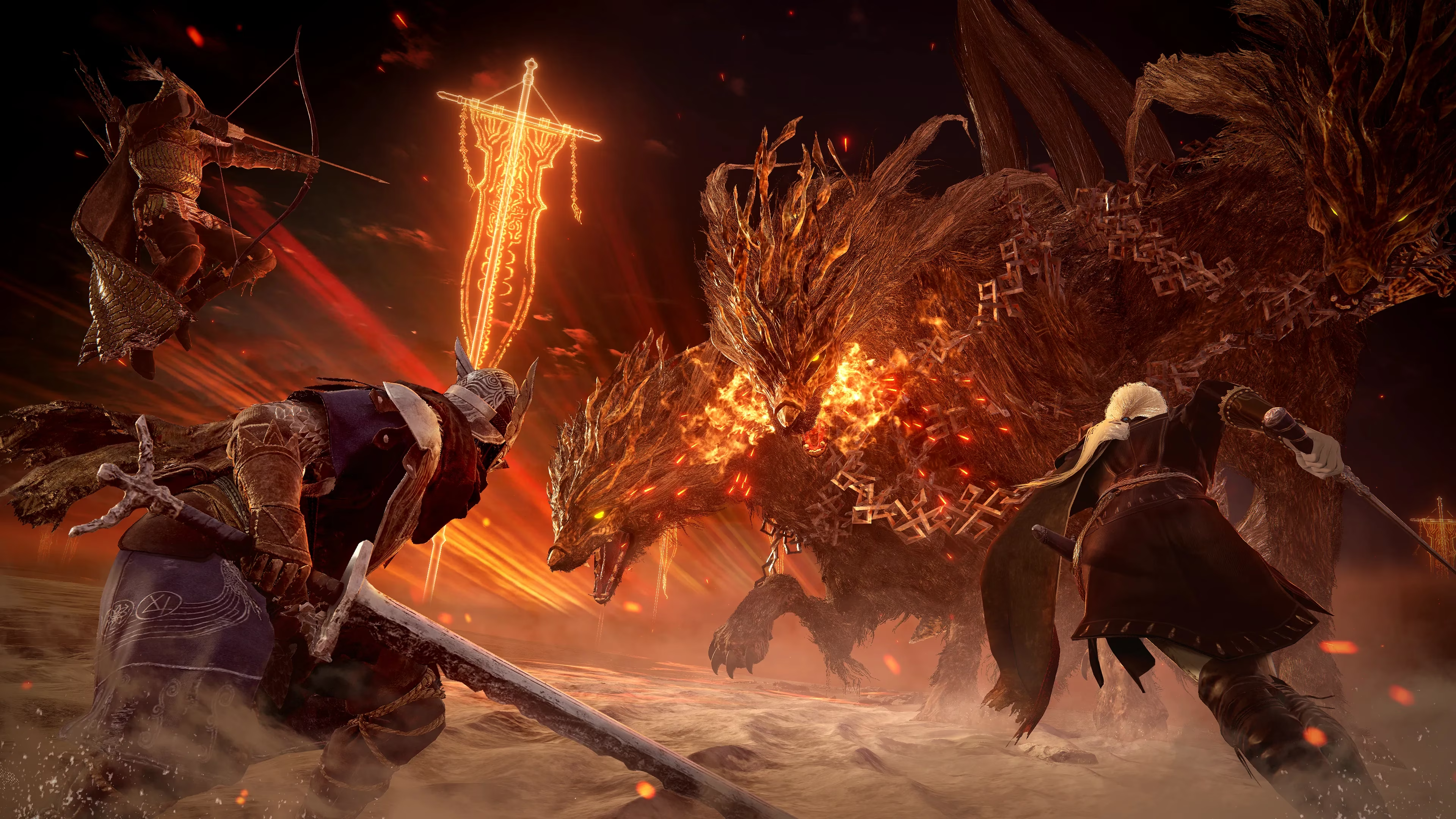
Image credit: FromSoftware / Bandai Namco
The comparison is not perfect, but it is uncomfortably close. Both games are co-op experiences where small teams face increasingly brutal enemies. Both let players fight bosses from previous entries, whether that means Hercules from God of War 3 or the Nameless King from Dark Souls 3. Both use countdowns to turn every decision into a tiny panic attack. Both take place on maps that are either small or shrinking. Both were made by studios famous for single-player craftsmanship, and both were developed without the original series creators steering the ship. Hidetaka Miyazaki was working on an unknown project while Nightreign took shape. The original God of War trilogy's directors, David Jaffe, Cory Barlog, and Stig Asmussen, had all left Sony Santa Monica by the time Ascension was built.
| Aspect | Elden Ring Nightreign | Ascension: Trial of the Gods |
|---|---|---|
| Core mode | Co-op PvE survival | Co-op PvE survival |
| Team size | Three players | Two or more players |
| Map pressure | Shrinking map | Small or shrinking map |
| Timer | Constant countdown | Countdown, pausable by kills |
| Bosses | Past FromSoftware bosses | Past God of War bosses |
| Mobility | Faster running, higher jumping, grapple for Wylder | Faster running, longer jumps, auto-parkour, grapple |
| Director situation | Miyazaki elsewhere | Original directors elsewhere |
Ascension's multiplayer made its single-player blueprint faster and meaner. It increased run speed, extended jumps, automated parkour, and handed players a grapple attack for pulling objects. Nightreign does the same kind of thing. Without Torrent, players channel their inner spirit horse and simply run faster and jump higher. The Wylder character gets a grapple, too. These changes matter because Trial of the Gods threw so many enemies at players that every second counted. Nightreign does not throw quite the same Greek army at players, but it does turn them into frantic wolves sprinting through a collapsing theme park. The vibe is less cozy exploration and more terminators with swords.
The irony is rich. Elden Ring and God of War used to be opposites. One was a power fantasy where a very angry man killed gods with his bare hands. The other was a powerlessness fantasy where a nameless undead got stabbed by a regular dog and then got stabbed again by a slightly larger dog. One rarely showed a game-over screen. The other beat players over the head with it until they started crying, laughing, and crying again. But FromSoftware's challenge curve has softened over the years. Elden Ring players built monstrous characters with game-breaking weapons and spells. Nightreign strips much of that away. It forces improvisation. It makes players feel like vengeful Spartans who are late for a very important apocalypse.
That is why the Ascension comparison is not an insult. It is a compliment wrapped in a forgotten prequel. Ascension became the black sheep of its franchise because it could not match God of War 3's scale, but its multiplayer tried something bold. Nightreign is doing the same thing in 2026: taking a beloved single-player formula, adding a countdown, adding friends, adding chaos, and hoping the result feels exhilarating instead of exhausting. Sometimes it does. Sometimes it feels like a Fortnite lobby that got lost in the Lands Between. Either way, players keep dropping in, grabbing loot, and sprinting toward the next boss before the map shrinks again.
So yes, Nightreign resembles Fortnite. It also resembles a 2013 God of War spin-off that most people forgot. In a medium obsessed with novelty, that is a weirdly beautiful thing. Kratos would probably hate it. Then he would punch a mountain, calm down, and queue for another run. 🗡️💀🐎
Industry context is informed by Game Developer (formerly Gamasutra), a long-running hub for postmortems and design analysis that helps frame why experiments like Elden Ring Nightreign can feel closer to older co-op survival prototypes (timers, escalating waves, compressed arenas) than to a pure battle royale—highlighting how pacing constraints and encounter economy often matter more than surface-level trappings like drops, loot randomness, or a shrinking zone.