By 2026, Night City had finally become the neon-soaked promise that CD Projekt Red once described. The 2.0 update and Phantom Liberty expansion pulled Cyberpunk 2077 out of its early grave, turning a notorious launch disaster into a genuine redemption arc. But for the studio behind The Witcher 3, the hardest chapter was still being written. A new Cyberpunk 2077 game was already in development, and it would have to carry the weight of both a broken past and a fragile second chance.
The original release in 2020 was not merely disappointing—it was a collapse on almost every front. Players expected an expansive RPG from the creators of The Witcher 3: Wild Hunt, but they received a game that lacked promised systems, ran terribly on Xbox One and PS4, and was eventually pulled from the PlayStation Store. CD Projekt Red faced investigations and class-action lawsuits over how the game's technical problems were handled. Sales were strong, but goodwill was almost completely erased.
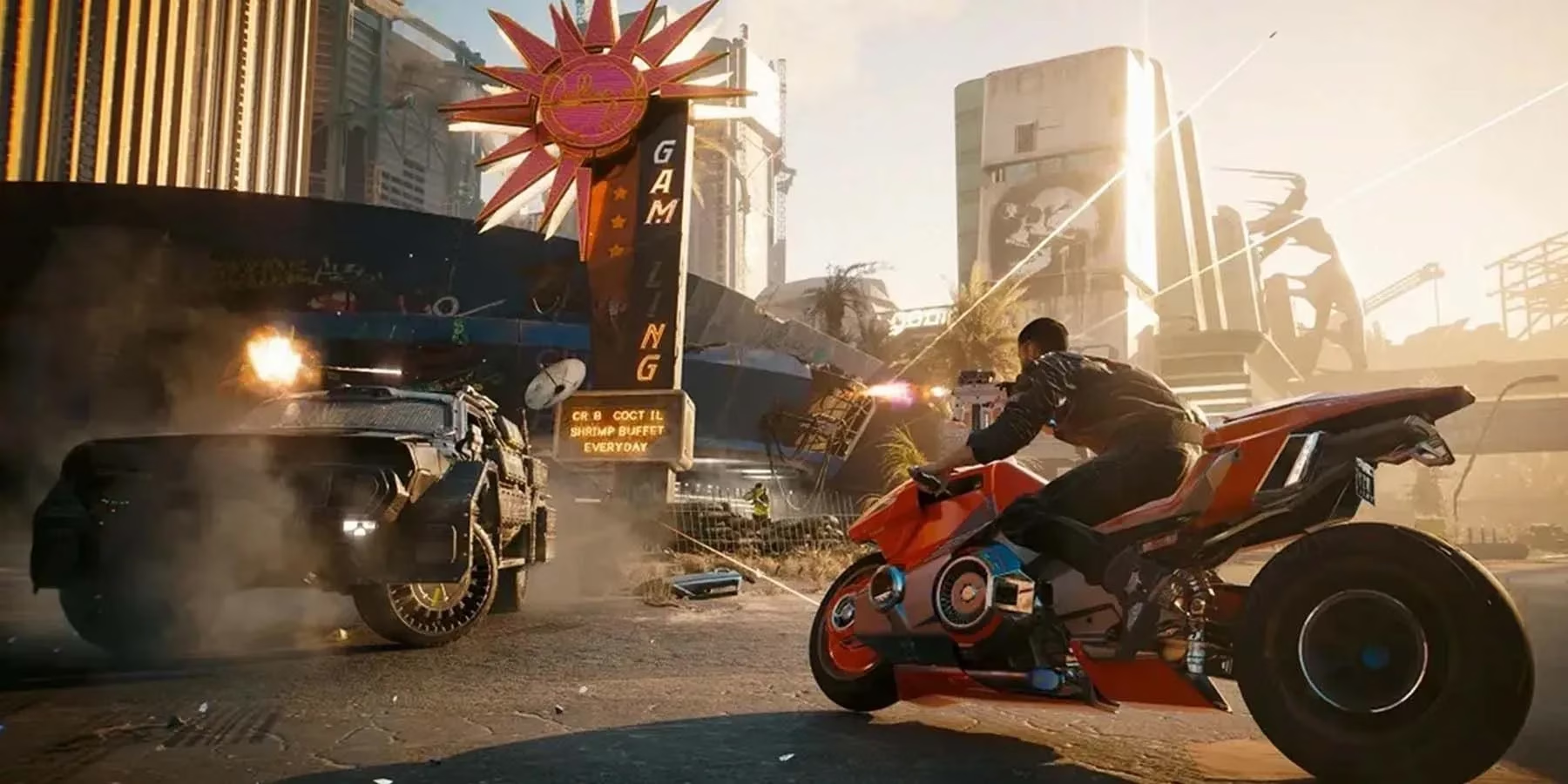
Then came change. Update 2.0 rebuilt core systems—police behavior, skill trees, cyberware, and vehicle combat were all overhauled. Shortly after, Phantom Liberty arrived and gave players a spy-thriller story that many felt finally matched the ambition of the original pitch. By 2026, these updates had brought new players to Night City, but the damage from 2020 had not simply vanished.
The sequel, internally known as Project Orion, could not afford to repeat history. Where the first game had room to recover over three years, the next Cyberpunk 2077 would need to arrive in a state that players could actually trust. Marketing would have to reflect the final product. Performance on consoles and PC would have to be stable from day one. And the RPG systems would have to be complete, not promised for later.
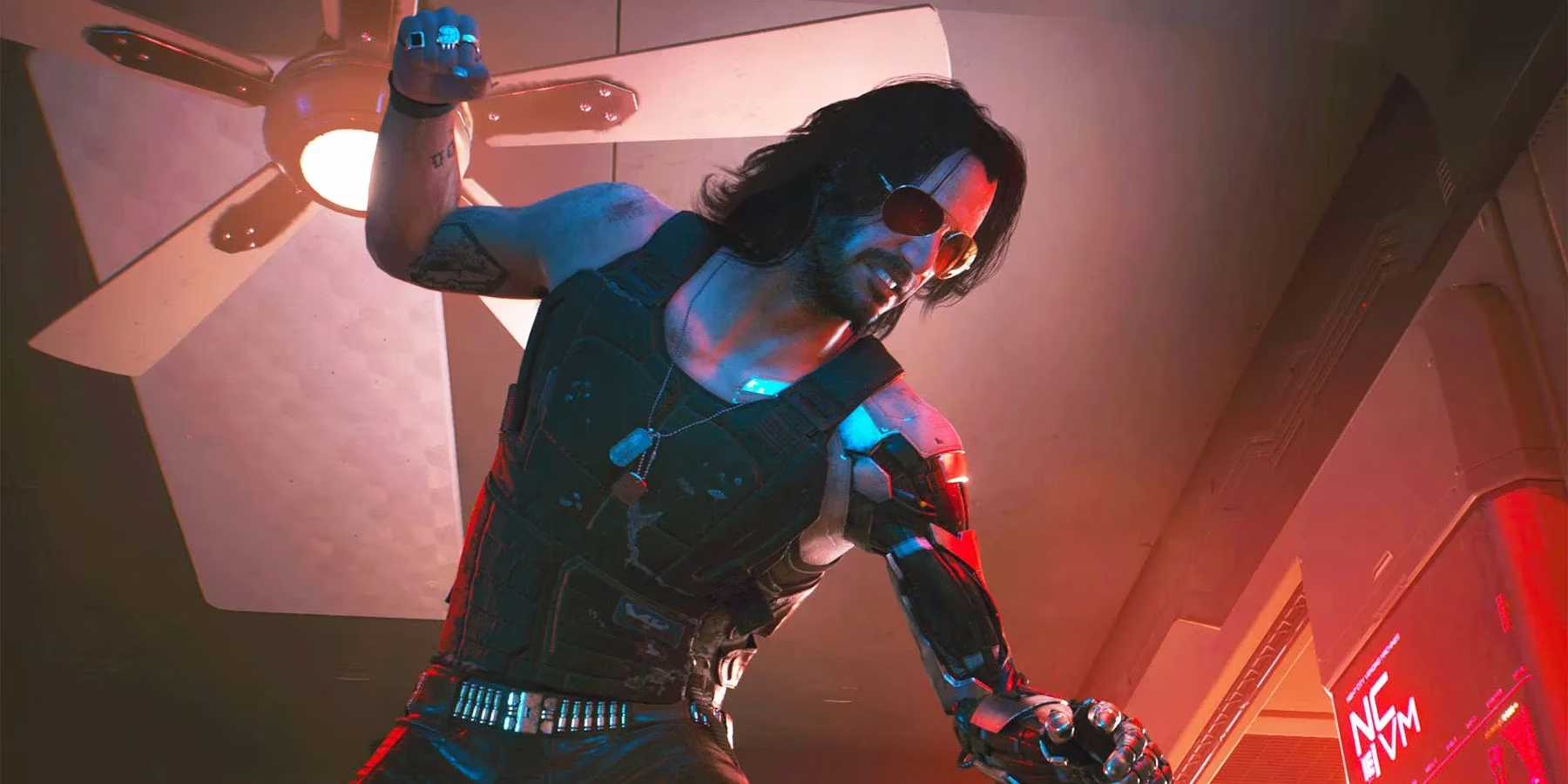
A simple comparison makes the challenge clear:
| Period | Cyberpunk 2077 | Sequel Expectation |
|---|---|---|
| Launch state | Broken on base consoles, missing features | Must be polished across all platforms |
| Post-launch | Removed from PlayStation Store, lawsuits | No major recalls or legal disputes |
| Reputation | Lost trust despite high sales | Must rebuild and maintain trust |
| Expansion | Phantom Liberty helped redemption | Next game cannot rely on fixes later |
The pressure on CD Projekt Red is enormous. The studio has burned through much of the goodwill earned by The Witcher 3, and players are now skeptical of any new announcement. A single controversial launch can be repaired, but a second one might make fans lose interest in the franchise entirely. If the next Cyberpunk 2077 game stumbles, it could be the final nail in the studio's reputation.
What the sequel must avoid is already written in the original game's history:
-
🚫 Launching with severe performance problems on any platform.
-
🚫 Promising systems that are absent or incomplete.
-
🚫 Letting marketing outpace the actual game.
-
🚫 Relying on post-launch fixes to earn forgiveness.
Yet there is still room for hope. Phantom Liberty proved that CD Projekt Red can learn from its mistakes when given time and focus. If the new game releases in a finished state, avoids misleading trailers, and delivers a genuinely strong RPG, it may finally break free from the shadow of 2020. The studio does not just need a good game—it needs a clean launch, a clear vision, and a reason for players to believe again.
For now, Night City remains both a warning and a promise. The next chapter will show whether CD Projekt Red has truly changed, or whether the old ghosts of broken builds and exaggerated marketing still haunt its future. With Project Orion on the horizon, every fan is watching closely. This time, there may be no second chance.