In 2026, Night City still hums with neon and chrome, but one question refuses to fade: why can't players see their own V from behind? When Cyberpunk 2077's 2.0 update and Phantom Liberty expansion arrived, they brought new mechanics, characters, and a rebuilt skill tree. Yet a full third-person mode remained absent. For a mercenary named Kael, that absence felt personal. He had spent hours crafting V's look, only to glimpse it in mirrors and photo mode. He wondered if CD Projekt Red had simply ignored the community. The answer, as it turned out, was more complicated.
The Immersion Argument
CD Projekt Red's Global Community Director, Marcin Momont, addressed the request directly. He explained that the game was designed for first-person immersion. The studio wanted players to feel the city through V's eyes, not watch V from a distance. In third-person, that intimate connection can slip away. Is it easier to fear a dark alley when you are looking over a character's shoulder? Or when you are the character, hearing every footstep and heartbeat? For CDPR, the answer was clear. First-person was not a limitation; it was a creative choice.
Where Third-Person Sneaks In
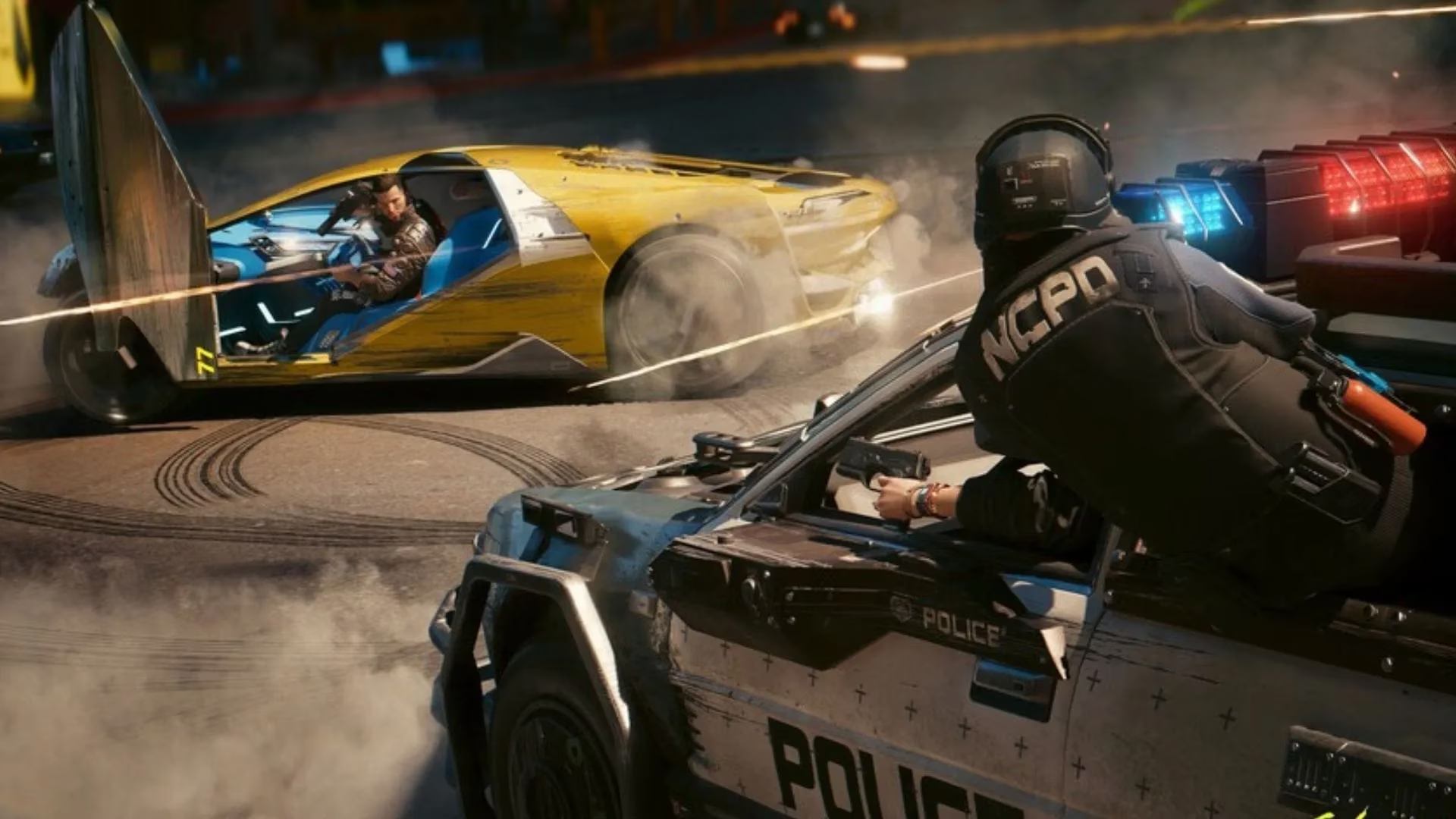
Yet the game does not reject third-person entirely. Whenever Kael hops into a car or motorcycle, the camera pulls back. Night City's streets become a blur of rain, tail lights, and radio chatter. Racing fans understand why. Controlling a vehicle from a first-person cockpit can be disorienting, especially in a dense open world. By allowing third-person driving, CDPR made a prudent compromise. It kept immersion on foot while giving players a better view of the road. So why not extend that same courtesy to walking? The answer lies in the scope of Phantom Liberty.
The Weight of Phantom Liberty
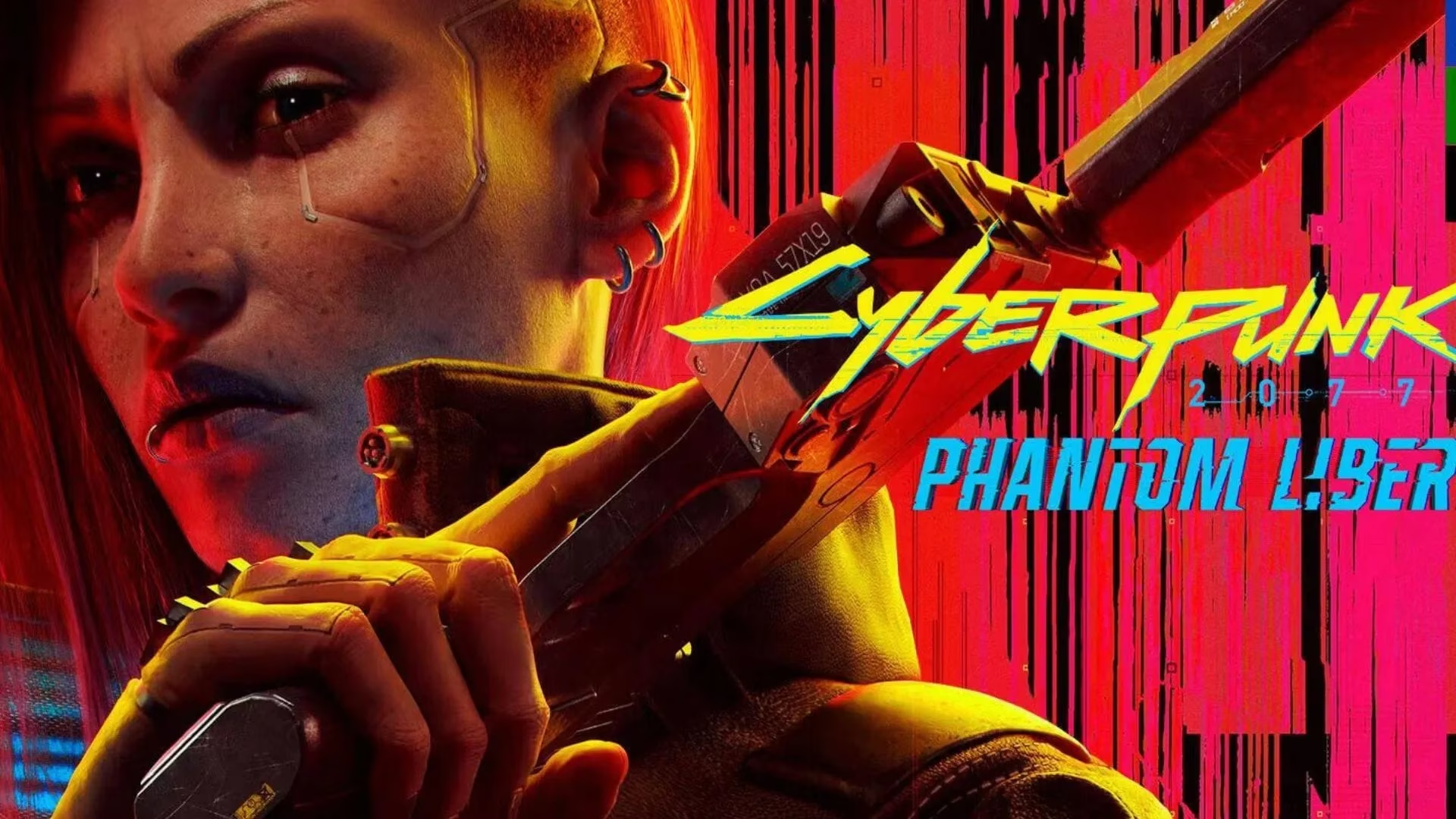
Phantom Liberty was not a small DLC. It overhauled Cyberpunk 2077's gameplay system, affected character abilities, introduced new mechanics, and added fresh scenarios in Dogtown. The expansion took considerable time and resources. According to the reference material, changing the creative decision to use first-person mechanics was not feasible. The team had already committed to a design language. Rewriting camera systems, animations, and combat encounters for third-person would have meant rebuilding the game from the ground up.
There was another burden. Cyberpunk 2077 had a troubled launch. Missions got stuck. The promised world felt empty. NPCs behaved strangely. Players reported performance issues, especially on consoles. The Xbox and PlayStation versions lacked the visual fidelity of PC, and the game would slow down or freeze in certain scenes. Fixing these bugs across many patches consumed the studio's attention. Third-person implementation had to wait, perhaps forever.
| Challenge | Impact on Third-Person |
|---|---|
| Launch bugs | Resources diverted to stability and performance |
| Console limitations | Visual fidelity and frame rate needed urgent work |
| Phantom Liberty scope | Gameplay overhaul left little room for camera redesign |
| Creative vision | First-person immersion was a core pillar |
Mods, Hope, and the Sequel
Kael eventually found a community mod that allowed third-person play. It was rough, but it offered a preview. He could finally see V's jacket ripple in the wind. The mod proved that the experience was possible, but it also revealed why CDPR hesitated. Combat, dialogue, and scripted scenes were built around first-person. A mod could bend the rules; an official mode would need to rewrite them.
By 2026, CD Projekt Red has moved on to Project Orion, the next Cyberpunk saga. The studio has not confirmed a third-person mode for the sequel. But the company has remained receptive to feedback. Perhaps the next generation of Night City will let players choose their perspective. Perhaps immersion and visibility can coexist. Until then, Phantom Liberty remains a first-person story. Players can drive in third-person, but they must walk in V's shoes. Is that a flaw, or is it the point? For now, CDPR's answer is the latter.