As a long-time gamer, I've witnessed a remarkable evolution in how video games approach puzzles. In the early days, solutions were rigid and singular, constrained by the hardware and design philosophies of the time. The goal was simply to find the one correct path laid out by the developers. Today, in 2026, that paradigm has been completely overturned. The most celebrated games are those that hand players a set of tools and the freedom to use them in wildly unpredictable ways. The reward is no longer just progression, but the sheer joy of discovering a solution that feels uniquely your own. This shift towards open-ended, systemic problem-solving has created some of the most memorable and player-driven experiences in gaming history.
Undertale: Where Your Choices Are the Solution

Toby Fox's 2015 indie masterpiece, Undertale, remains a landmark title for creative expression. It famously subverted RPG combat by allowing—and rewarding—players for finding non-violent solutions to every encounter. But its genius extends to its puzzles as well. Faced with a maze conjured by a mischievous skeleton? You could solve it traditionally, or you could simply... walk around the edges. The game's world and narrative branches react organically to these choices. Sparing or fighting, solving or circumventing, each decision weaves a personal story. The ultimate reward for creative thinking here isn't a loot chest; it's deeper connections with its iconic characters and access to hidden narrative layers you crafted yourself.
Scribblenauts Unlimited: The Dictionary is Your Toolbox
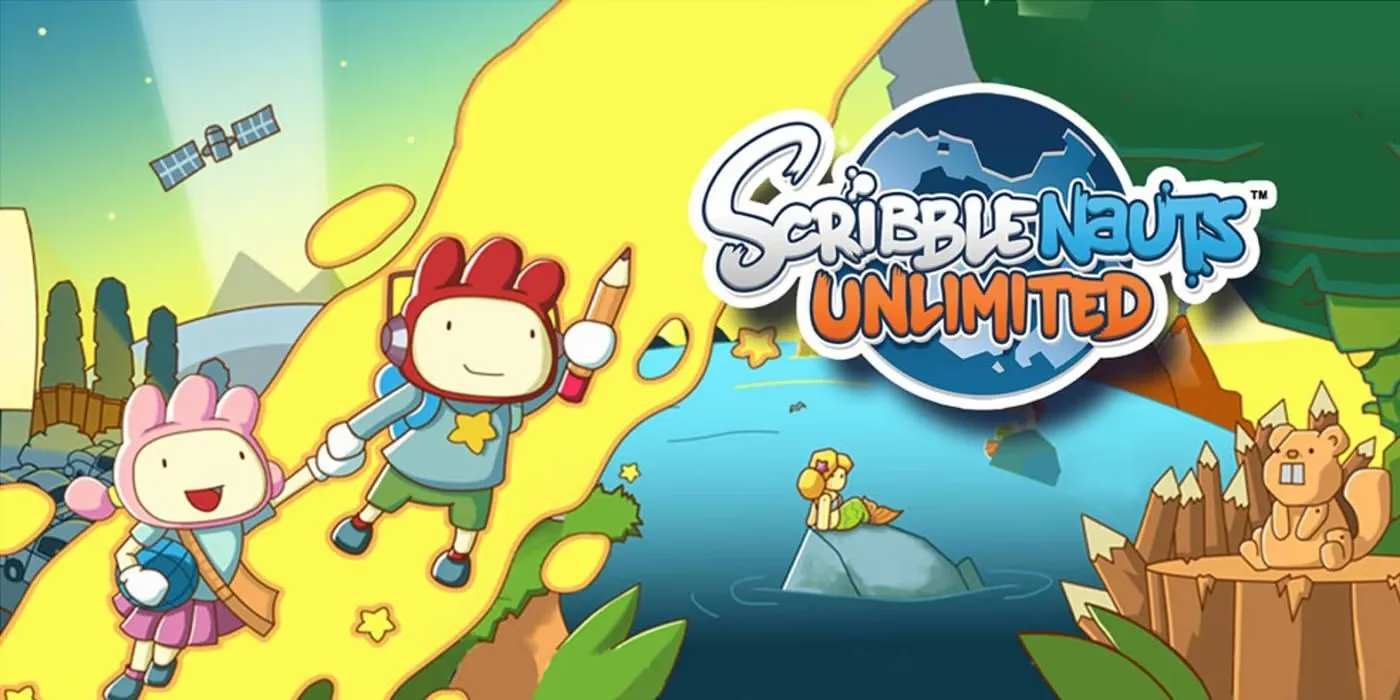
If any game embodies the phrase "thinking outside the box," it's the Scribblenauts series. The core mechanic is beautifully simple yet infinitely complex: you write any noun, and it appears in the game world. Need to cross a gap? You could summon a bridge, a giant eagle, or even create a jetpack-wearing penguin. Adjectives add another layer: a flaming, frozen, or invisible car. The game presents objectives, but it truly doesn't care how you achieve them. The only limits are your vocabulary and imagination. This sandbox approach turns every puzzle into a playground, rewarding players for the most whimsical and unexpected combinations imaginable. It's a powerful testament to the creativity that games can unlock when they remove prescribed paths entirely.
Portal 2: Physics as a Playground
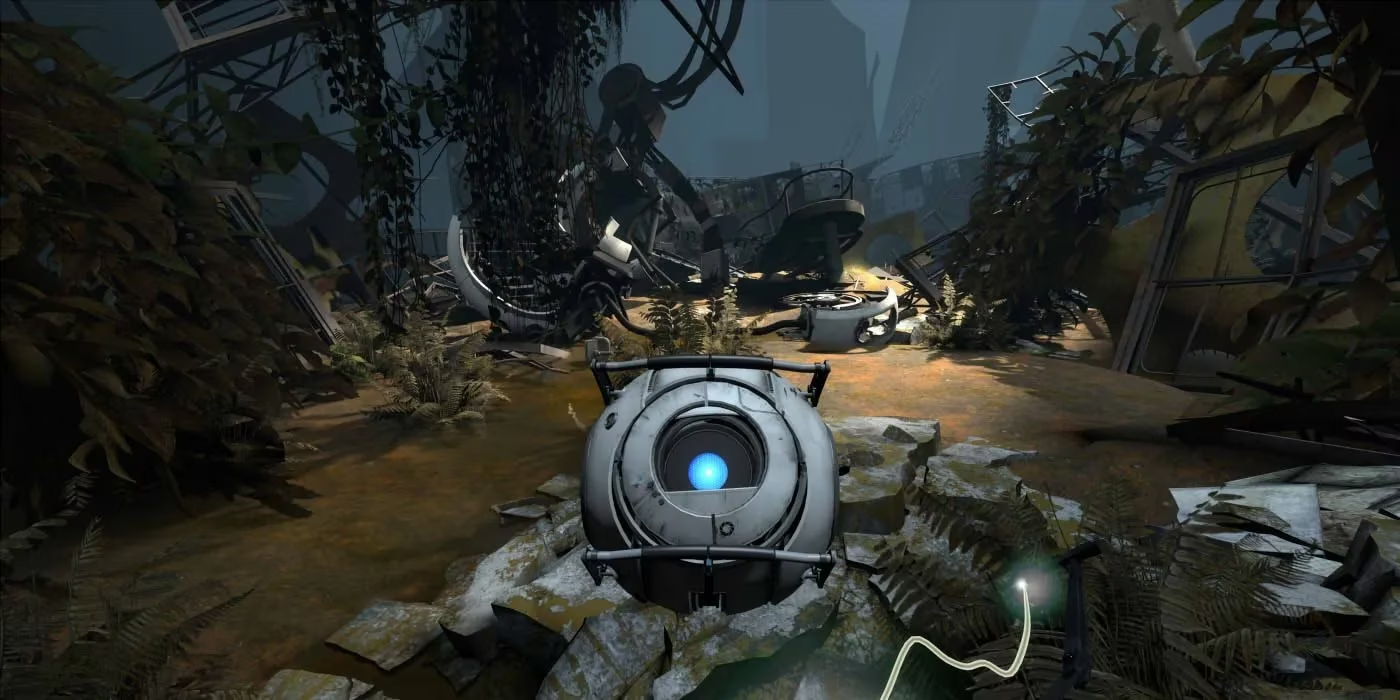
Valve's Portal 2 is a masterclass in elegant game design that trusts the player's intellect. The premise is consistently simple: get from the start of a test chamber to the exit. The tools are deceptively basic: a device that creates two connected portals. Yet, the emergent possibilities within the game's flawless physics engine are staggering. While there is often an intended solution, the game never punishes you for finding a more chaotic, physics-defying shortcut. Propelling yourself across vast chasms using momentum, using cubes to trigger switches from afar, or stacking objects to climb walls—if it works, it's valid. GLaDOS might mock you, but the data is accepted. The reward is that sublime eureka moment when your unorthodox plan comes together, proving you've outsmarted the system designed to test you.
The Legend of Zelda: Tears of the Kingdom - Engineering Your Own Fun
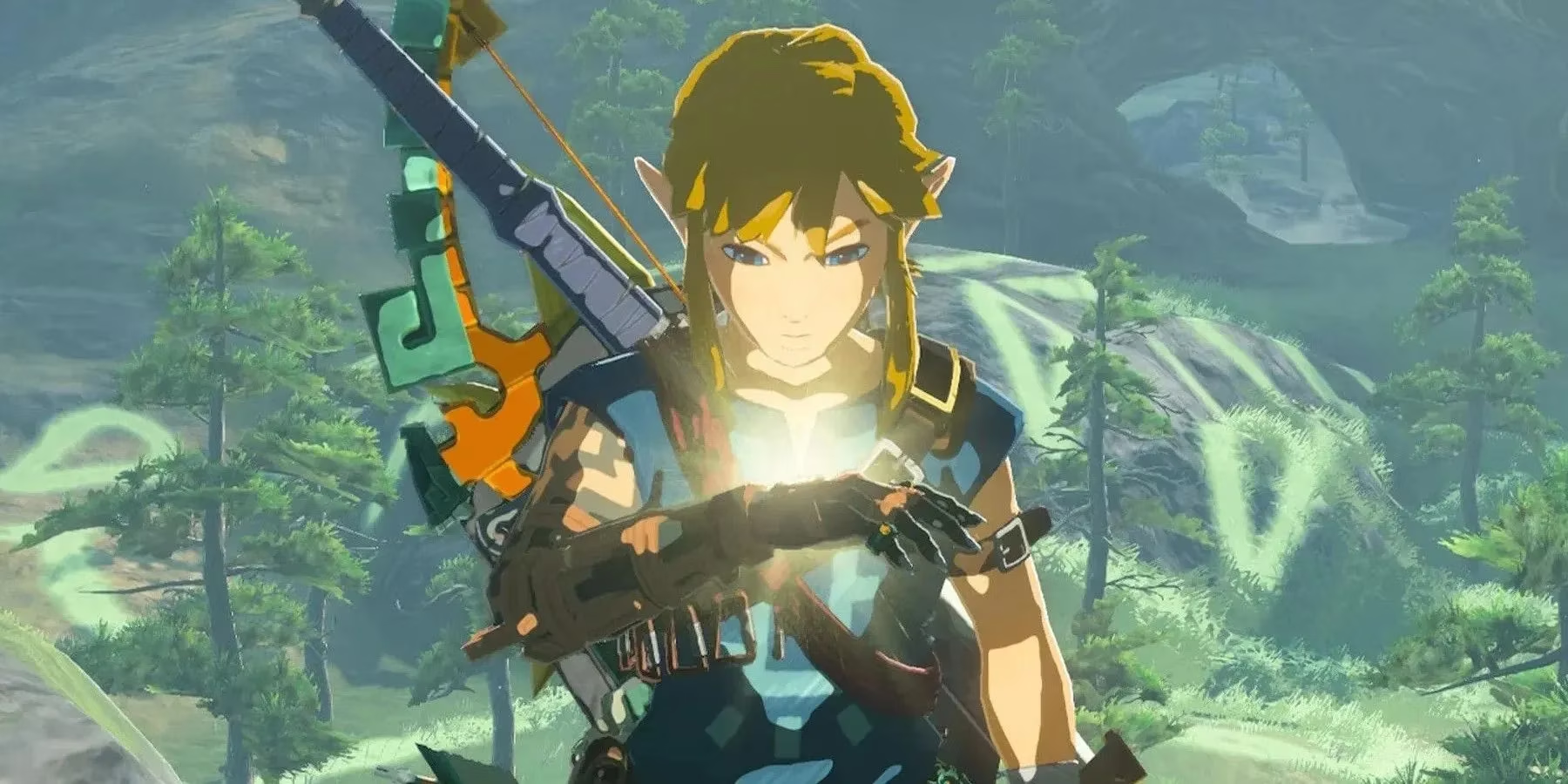
Nintendo took the open-ended philosophy of Breath of the Wild and amplified it exponentially with The Legend of Zelda: Tears of the Kingdom. The introduction of the Ultrahand and Fuse abilities, along with Zonai devices, transformed Hyrule into the ultimate engineering sandbox. Puzzles often have suggested solutions, but the real magic happens when players ignore the instructions entirely. Need to reach a sky island? You could use the provided materials... or you could build a colossal flying machine powered by fans and rockets, a hovering fortress with beam emitters, or a simple hot air balloon. The game's systems interact so cohesively that creative problem-solving is constantly rewarded with moments of pure, unscripted triumph. It didn't just give players a wheel; it gave them the schematics to invent entirely new forms of transportation.
Baldur's Gate 3: The Digital Dungeon Master
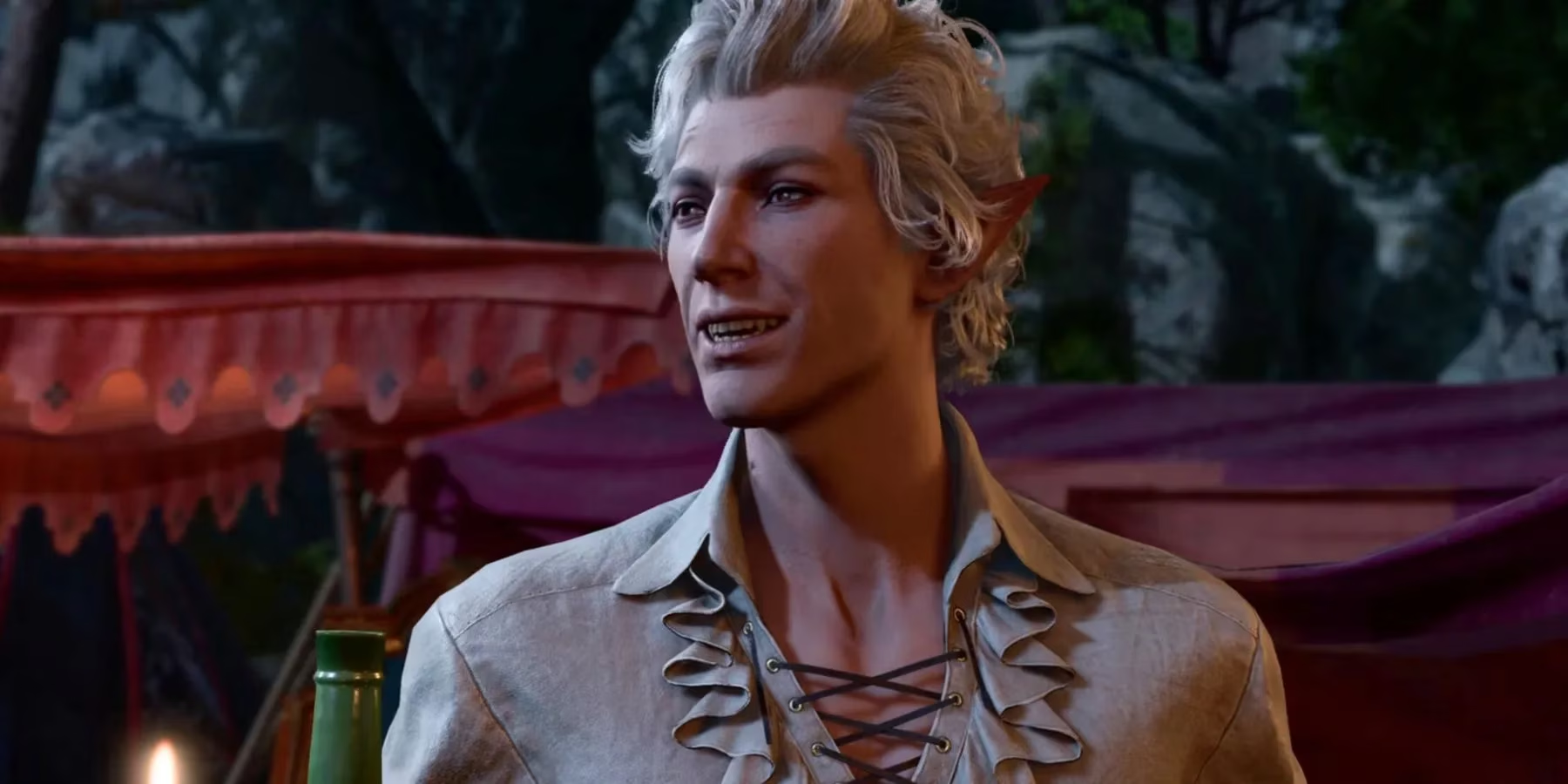
Larian Studios' 2023 phenomenon, Baldur's Gate 3, achieved something monumental: it captured the boundless creativity of a tabletop Dungeons & Dragons session. The game's systems are so deep and reactive that they encourage—and expect—lateral thinking. Confronted with a fortified gate, you have a dizzying array of options:
-
The Direct Approach: Fight your way through.
-
The Stealthy Route: Turn invisible or sneak through shadows.
-
The Diplomatic Path: Persuade, deceive, or intimidate the guards.
-
The Chaotic Solution: Use a spell to polymorph an enemy into a sheep, then distract the guards.
-
The Engineering Method: Stack crates to climb over the wall, or use a teleportation spell.
The game meticulously accounts for these possibilities, with NPCs remembering your actions and the world state shifting accordingly. Every quest has multiple endings, and every interaction can forge new alliances or ignite new conflicts. The reward is a profoundly personal story where your creative solutions don't just solve puzzles; they shape the fate of the entire realm. It stands today as the pinnacle of player-agency-driven narrative and problem-solving.
The Common Thread: Player Agency as the Ultimate Reward
Looking at these diverse titles, a clear trend emerges. The modern era of gaming prizes player agency above all else. The puzzles are no longer locked doors with single keys; they are complex situations with multiple potential outcomes. The rewards have evolved from mere points or items to more meaningful gains:
| Game | Creative Tool | Core Reward |
|---|---|---|
| Undertale | Narrative choice & pacifism | Deeper story branches & character bonds |
| Scribblenauts | Lexical creation | The joy of unimpeded imagination |
| Portal 2 | Physics manipulation | The satisfaction of systemic mastery |
| Tears of the Kingdom | Freeform engineering | Unscripted moments of emergent gameplay |
| Baldur's Gate 3 | Systemic RPG interactions | A deeply personal, player-authored narrative |
As we move further into this decade, I'm excited to see how developers continue to push these boundaries. The lesson is clear: when you trust players to be clever and give them the tools to express that cleverness, you create experiences that are not just played, but personally authored and unforgettable. The greatest puzzle a game can present now is not "what is the solution?" but "what is your solution?" 🎮✨